

Key Takeaways
Our Verdict
Online secondhand platforms shine when you're searching for a specific item, size, or era and have the patience to vet sellers carefully. In-store thrifting rewards those who enjoy the tactile experience and the serendipity of finding something unexpected. For most shoppers, a mix of both approaches - guided by what you're actually looking for - builds the most versatile, affordable wardrobe.
| Best for | Recommended |
|---|---|
| Shoppers hunting a specific item, size, or style | Online secondhand platforms |
| Those who want to assess garment condition and fit before committing | In-store thrifting |
| Budget-conscious shoppers wanting maximum variety per dollar | In-store thrifting |
| Shoppers in areas with limited local thrift options | Online secondhand platforms |
The Core Difference: Browsing Experience
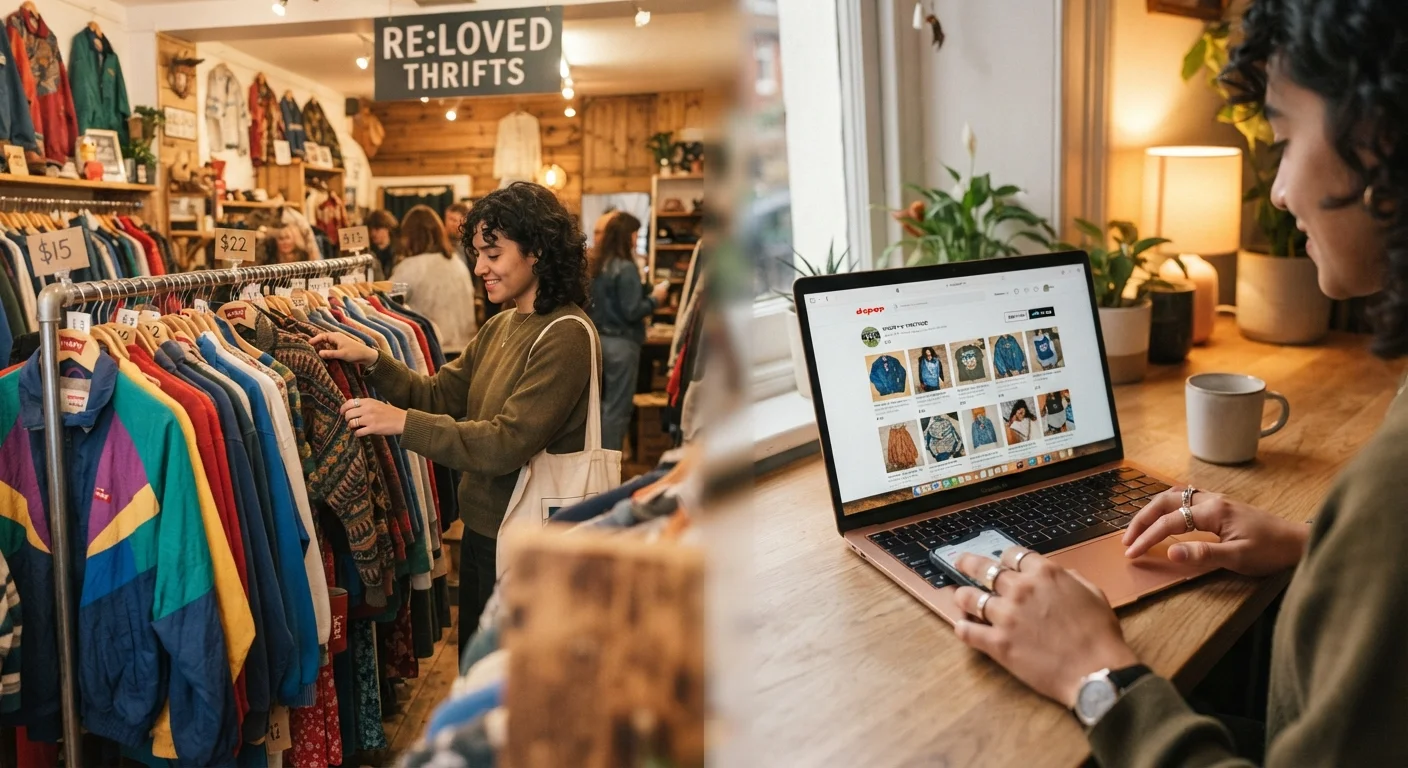
Shopping secondhand - whether scrolling an app at midnight or digging through a Sunday rack - is always a bit of a treasure hunt. But the nature of that hunt changes dramatically depending on the channel. Understanding those differences upfront saves frustration and helps you match your approach to your actual goal.
Online platforms let you filter by size, color, brand category, and price range almost instantly, which is a genuine advantage when you're after something specific. In-store thrifting offers no such precision - but what you gain is the ability to pull a garment off the hanger, feel the fabric weight, check the seams, and try it on. That physical feedback is genuinely difficult to replicate through photos and seller descriptions, no matter how thorough.
For a deeper look at how secondhand shopping in general affects wardrobe building, see how secondhand vs. new shapes your wardrobe.
What Changes: Condition Assessment and Sizing
Condition grading is where these two channels diverge most significantly. In a physical store, "good condition" is something you verify with your own eyes and hands - pilling, fading, missing buttons, and odors are immediately apparent. Online, you're relying on a seller's description, their photo quality, and whatever condition scale the platform uses, which isn't always standardized.
Sizing adds another wrinkle. Vintage and secondhand clothing often predates current size conventions, meaning a label that reads "Medium" might fit like a modern Small - or a Large. In-store, you just try it on. Online, you're dependent on the seller providing accurate measurements and on knowing your own body measurements well enough to compare. Neither situation is impossible to navigate, but online sizing requires more homework.
| Online Secondhand | In-Store Thrifting | |
|---|---|---|
| Search & Filtering | Filter by size, color, price, category | No filtering; requires physical browsing |
| Condition Assessment | Relies on photos and seller descriptions | Inspect and smell items firsthand |
| Sizing Accuracy | Need seller measurements; more risk | Try on before buying; immediate feedback |
| Return Options | Varies by platform; some buyer protection | Almost always final sale |
| Price Range | Often slightly higher; shipping adds cost | Generally lower; no shipping fees |
| Inventory Access | Nationwide or global selection | Limited to local store stock |
| Time Investment | Browse anytime; vetting takes effort | Travel required; browsing is hands-on |
Before completing any online secondhand purchase, a structured pre-purchase review is worth the extra minute. Our pre-purchase checklist for online shopping walks through exactly what to verify.
What Stays the Same: The Patience Factor
Whether you're clicking through hundreds of listings or working through a packed thrift rail, patience is non-negotiable in secondhand shopping. Both channels reward consistency over single visits - inventory turns over constantly, and finding quality pieces usually means showing up (physically or digitally) more than once.
Price negotiation exists in both environments, too. Many in-store thrift shops have color-tag discount systems or weekly sale days. Online platforms frequently allow buyers to make offers below the listed price, and sellers often accept. In both cases, the final price you pay can be lower than what's initially displayed - if you're willing to ask or wait.
Maximize Both Channels Together
Use online platforms to research what a fair price looks like for a particular item or brand before heading in-store. Conversely, when you find a piece in a physical thrift shop that doesn't fit quite right, search for the same item online in your size. Treating both channels as complementary - rather than competing - gets you the best of both worlds.
For context on how secondhand fits into the broader shopping landscape, the online vs. in-store shopping comparison covers how channel choice maps to purchase type across categories beyond fashion.
Returns, Shipping, and the Hidden Costs
In-store thrift purchases are almost universally final sale - once you walk out the door, the item is yours. That makes the try-on step non-optional. Online platforms vary: some peer-to-peer marketplaces also operate as final sale, while others offer buyer protection programs or return windows if an item is significantly misrepresented. Read the platform's policy before you buy, not after.
Shipping costs can quietly erode the value of an online thrift find. A $12 blouse plus $8 shipping is still a reasonable deal, but stacking several small purchases can add up quickly. Bundling items from a single seller when possible, or setting a minimum item price threshold to justify shipping, helps keep the math in your favor.
If secondhand shopping fits into a broader effort to spend more intentionally, the smart shopping starting point guide covers the budgeting and quality-evaluation fundamentals that apply across every channel.