

Key Takeaways
Our Verdict
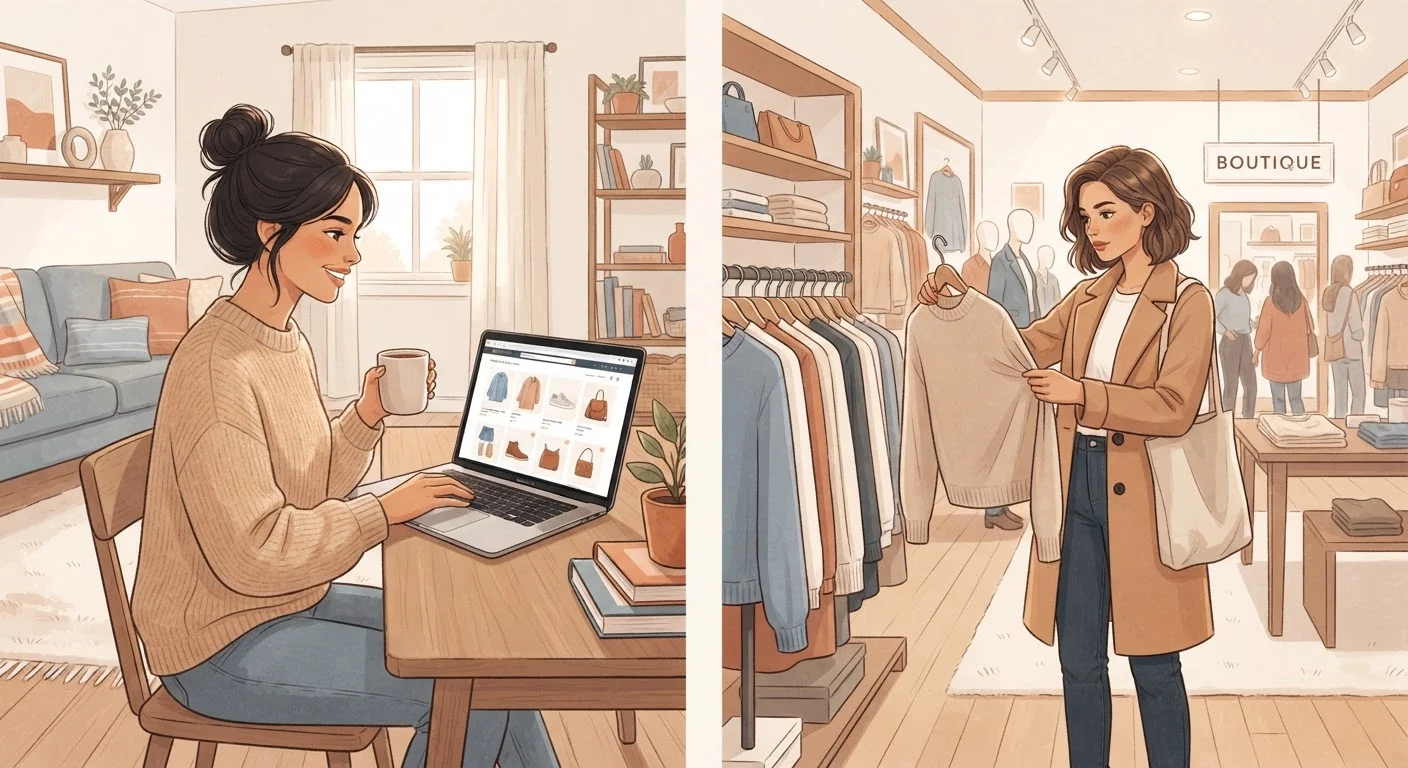
Online and in-store shopping each have a legitimate place in a smart consumer's toolkit. The key is recognizing which channel reduces risk and increases value for a specific type of purchase, rather than defaulting to one out of convenience or habit.
| Best for | Recommended |
|---|---|
| Buyers purchasing commodities, electronics, or well-researched repeat items | Online Shopping |
| Shoppers buying clothing, furniture, fresh food, or anything requiring sensory evaluation | In-Store Shopping |
| Consumers wanting to compare prices before committing in person | Hybrid Approach |
| Time-sensitive needs or same-day purchases | In-Store Shopping |
Why Channel Selection Is a Strategic Decision
Most Americans now switch between online and in-store shopping routinely, but few stop to ask whether the channel matches the purchase. Defaulting to one approach - always clicking to a browser or always driving to a store - can cost real money, create frustration, or result in products that disappoint. The decision deserves a moment of deliberate thought.
Channel selection affects more than convenience. It influences how accurately you can assess quality, how exposed you are to impulse triggers, how easily you can return a wrong item, and what you actually pay after shipping, taxes, and fees. For a deeper foundation on evaluating value before spending, see our consumer starting-point guide.
| Online Shopping | In-Store Shopping | |
|---|---|---|
| Price transparency | Easy to compare across sellers | Limited to that retailer's pricing |
| Product accuracy | Relies on descriptions and photos | See and handle the actual item |
| Fit and sensory evaluation | Not possible before purchase | Immediate, hands-on assessment |
| Return process | Often requires shipping; fees vary | Typically easier with receipt in hand |
| Selection breadth | Vast; not limited by shelf space | Constrained by store inventory |
| Time to receive item | Hours to days depending on shipping | Immediate |
| Impulse purchase risk | Algorithmic recommendations increase risk | Store layout and displays increase risk |
Where Online Shopping Has a Genuine Edge
Online shopping consistently outperforms in-store for specific categories. Commodity and replenishable goods - think household cleaning supplies, paper products, or shelf-stable pantry staples - are well-suited to online ordering. You know exactly what you're getting, and price comparison across retailers is straightforward. Buying in bulk online can extend that advantage further for the right product types.
Researched electronics and appliances are another strong online category, provided you've read independent reviews, confirmed specifications, and verified the seller's return policy. Online channels also give you access to a wider selection and the ability to compare specifications side-by-side without a salesperson present. Before finalizing any online order, it's worth running through a pre-purchase checklist to verify seller credibility, shipping costs, and return terms.
Verify Total Cost Before Ordering Online
Online list prices rarely tell the full story. Factor in shipping fees, estimated taxes, and potential return shipping costs before assuming online is cheaper. For large or heavy items, freight charges can significantly close the gap with in-store pricing.
When In-Store Shopping Is Worth the Trip
Physical retail holds real advantages that a product page cannot replicate. Fit-dependent purchases - clothing, footwear, and eyewear - carry significant return friction when bought online. Sizing varies by brand, fabric drape isn't visible in photos, and the cost of return shipping can quietly erode any price advantage. This dynamic applies to both new and secondhand clothing; see how each affects wardrobe building for a fuller picture.
High-sensory purchases - mattresses, upholstered furniture, fragrances, and fresh food - also favor physical shopping. A mattress firmness rating is an approximation; lying on it is data. Similarly, time-sensitive needs (a replacement part for a broken appliance, a last-minute gift) are better served in-store, where you leave with the item rather than waiting for delivery windows.
Don't Let Free Returns Create a False Safety Net
Retailers periodically change return policies, and 'free returns' often come with time limits, restocking fees, or store-credit-only restrictions buried in the fine print. Always read the return policy for your specific order before purchasing, not after. This is especially important for high-value or seasonal items where a narrow return window can catch you off guard.
The Hybrid Strategy: Getting the Best of Both
Many experienced consumers use a deliberate hybrid approach: research online to narrow options and confirm pricing benchmarks, then buy in-store for tactile evaluation, or vice versa. This is especially effective for larger purchases like furniture or appliances, where you want the selection breadth of online research and the hands-on confidence of a showroom visit.
Understanding seasonal discount patterns adds another layer - certain categories go on sale at predictable times, and knowing that rhythm helps you plan which channel to use and when. For clothing in particular, the secondhand market adds a third dimension; thrifting online vs. in-person each come with distinct trade-offs worth understanding before you commit your time.
The bottom line: channel selection is a tool, not a preference. Applying it deliberately - rather than reflexively - is one of the most practical habits a consumer can build. See also how brand perception affects value judgments, another area where deliberate evaluation pays off.