

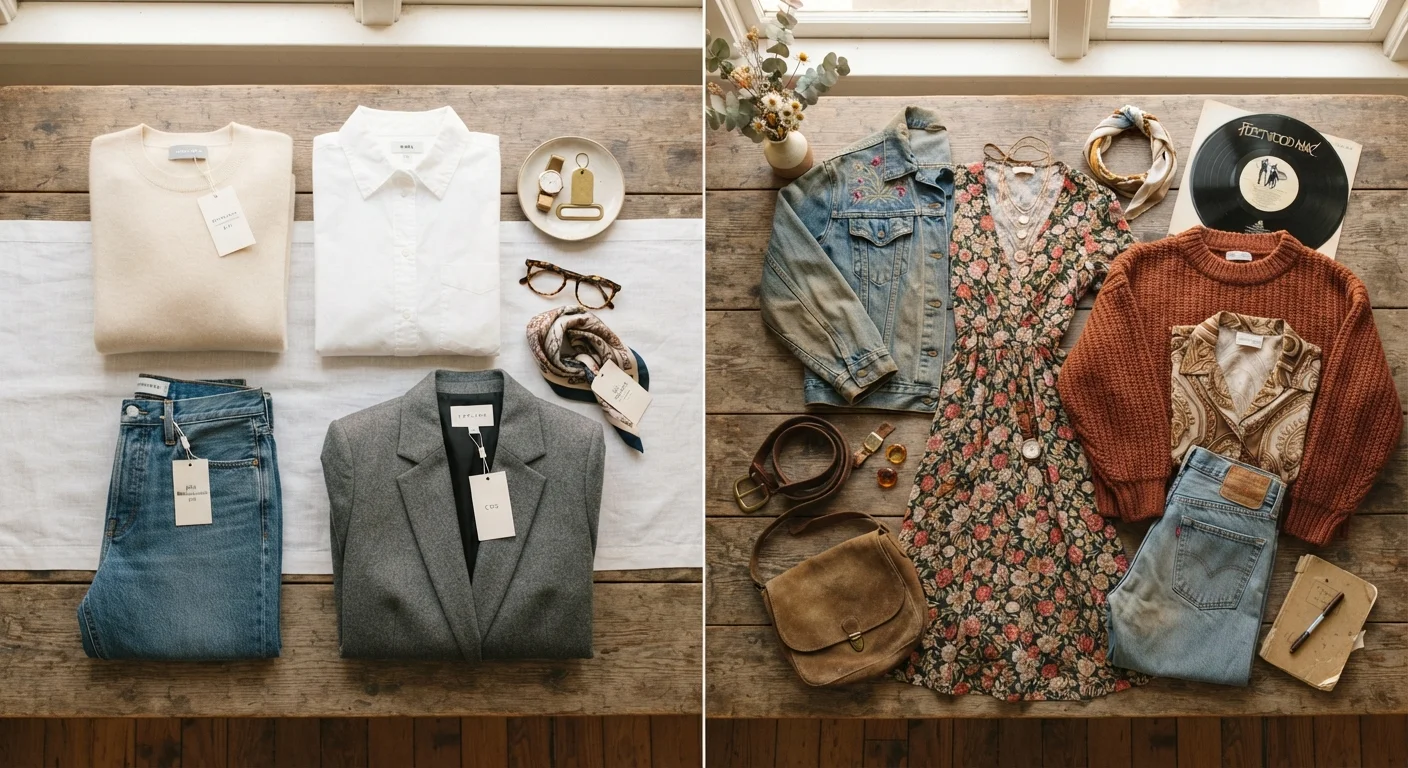
Key Takeaways
Lower cost enables lower-stakes style experimentation
When individual items cost a fraction of retail, you can afford to try silhouettes or styles you're uncertain about - which is exactly how personal taste develops over time.
Access to unique, one-of-a-kind pieces
Secondhand inventory includes items no longer in production, giving your wardrobe genuine distinctiveness that's hard to replicate through standard retail channels.
Often higher construction quality in older garments
Clothing made before the acceleration of fast fashion frequently used heavier fabrics and more durable construction techniques, meaning thrifted pieces can outlast newer equivalents.
Reduces the financial pressure of individual choices
Spending less per item makes it easier to donate or resell pieces that no longer serve your evolving style, keeping your wardrobe dynamic rather than static.
Inventory is unpredictable and size availability varies
Secondhand shopping doesn't guarantee you'll find your size, preferred color, or a specific item type - which makes it unreliable for targeted wardrobe gaps.
Condition assessment requires skill and time
Worn fabrics, missing buttons, altered hems, and hidden damage are common in secondhand finds, and evaluating them accurately takes experience and patience.
Thrifting can reward quantity over intentionality
The thrill of finding a bargain can lead to accumulating items that don't cohesively fit your actual wardrobe - a pattern sometimes called "thrift overload."
Our Verdict
Secondhand shopping is a powerful tool for style discovery, budget stretching, and finding genuinely unique pieces - but it rewards patience and a loose grip on specific expectations. Buying new gives you consistency, full-size runs, and items that arrive in predictable condition, making it the more practical anchor for foundational wardrobe pieces. The most functional wardrobes tend to blend both approaches thoughtfully.
Readers who are still figuring out their personal aesthetic will often find secondhand shopping a low-stakes, high-reward way to experiment, while those with a clear style and a need for specific wardrobe staples may lean on new purchases for reliability.
Why the Shopping Source Actually Matters for Style Development
Building a wardrobe isn't just a logistical exercise - it's an ongoing process of understanding what you actually want to wear and feel good in. Where you shop shapes that process more than most people realize. Secondhand and new clothing each create different conditions for discovering and refining your personal style, and neither is simply the "better" option. The right mix depends on where you are in your style journey and what you're trying to accomplish.
If you're starting from scratch or rethinking your approach entirely, this consumer starting point guide covers the foundational mindset shifts that make any shopping strategy more intentional - regardless of where you buy.
Lower cost enables lower-stakes style experimentation
When individual items cost a fraction of retail, you can afford to try silhouettes or styles you're uncertain about - which is exactly how personal taste develops over time.
Access to unique, one-of-a-kind pieces
Secondhand inventory includes items no longer in production, giving your wardrobe genuine distinctiveness that's hard to replicate through standard retail channels.
Often higher construction quality in older garments
Clothing made before the acceleration of fast fashion frequently used heavier fabrics and more durable construction techniques, meaning thrifted pieces can outlast newer equivalents.
Reduces the financial pressure of individual choices
Spending less per item makes it easier to donate or resell pieces that no longer serve your evolving style, keeping your wardrobe dynamic rather than static.
Where Secondhand Shopping Shines
Thrifting and resale platforms have evolved well beyond the dusty bargain bin. Today's secondhand market includes curated vintage shops, peer-to-peer resale apps, and organized consignment stores - all of which offer real advantages for building a wardrobe with character.
The lower price point is often the headline draw, and it's a legitimate one: spending less per item means you can afford to experiment with silhouettes, colors, and eras you might otherwise write off as too risky. That willingness to try things is exactly how personal style actually develops. Secondhand also surfaces items you simply can't find at conventional retailers - pieces with unusual construction, quality fabrics from earlier production standards, or styles that feel genuinely distinct from current mass-market offerings.
For a closer look at the specific differences between shopping resale online versus in person, this breakdown of secondhand shopping channels walks through what changes and what stays the same across both formats.
Where Buying New Has the Advantage
New clothing removes several variables that secondhand shopping introduces. You get your exact size in your exact colorway, in unworn condition, with return policies and intact care labels. For categories where fit is unforgiving - structured blazers, tailored trousers, fitted base layers - that predictability has real value.
New retail also gives you access to cohesive collections, which makes it easier to build outfits that work together from the start. When you're trying to fill a specific gap in your wardrobe rather than explore generally, a focused trip to a retailer - physical or online - is often more efficient than sifting through unpredictable secondhand inventory.
Inventory is unpredictable and size availability varies
Secondhand shopping doesn't guarantee you'll find your size, preferred color, or a specific item type - which makes it unreliable for targeted wardrobe gaps.
Condition assessment requires skill and time
Worn fabrics, missing buttons, altered hems, and hidden damage are common in secondhand finds, and evaluating them accurately takes experience and patience.
Thrifting can reward quantity over intentionality
The thrill of finding a bargain can lead to accumulating items that don't cohesively fit your actual wardrobe - a pattern sometimes called "thrift overload."
Building a functional wardrobe on a tight budget doesn't have to mean sacrificing versatility - and knowing when to buy new versus secondhand is one of the most useful decisions in that process.
How to Blend Both Approaches Intentionally
The most practical wardrobe strategy for most people isn't a strict commitment to one source - it's a framework for knowing when each makes sense. A few guiding principles help:
- Use secondhand for experimentation. Testing a new aesthetic, decade, or garment type costs less when you're not paying full retail. If it doesn't work, you haven't lost much.
- Use new for anchoring pieces. Classic fits, foundational basics, and items you wear constantly are worth the investment in reliable sizing and condition.
- Let your style clarity guide the ratio. Early in style development, secondhand-heavy shopping builds self-knowledge efficiently. As your taste sharpens, you may shift more purchases toward specific, deliberate new pieces.
Style Clarity Changes the Calculus
How much style clarity you have right now should influence how you weight secondhand versus new purchases. If you're still figuring out what you actually like to wear, the low-cost experimentation that secondhand offers is especially valuable. Once your aesthetic is more settled, new purchases let you fill precise gaps without the hunt. Neither phase lasts forever, and most wardrobes benefit from revisiting the balance periodically.
Getting more outfits out of fewer clothes is another lens worth applying here: whichever source you use, versatility and outfit-compatibility should be factors in every purchase decision.
And if the secondhand versus fast fashion angle is relevant to your thinking, this honest comparison of thrift stores and fast fashion examines both through cost, quality, and environmental trade-offs.
~$350
Average annual U.S. apparel spend per person
According to U.S. Bureau of Labor Statistics Consumer Expenditure data, Americans spend a meaningful share of their household budget on clothing each year.
33%
Shoppers who have bought secondhand clothing
Research from ThredUp's annual Resale Report has consistently found a significant and growing share of U.S. consumers participating in the secondhand market.