

Key Takeaways
Capsule Wardrobe
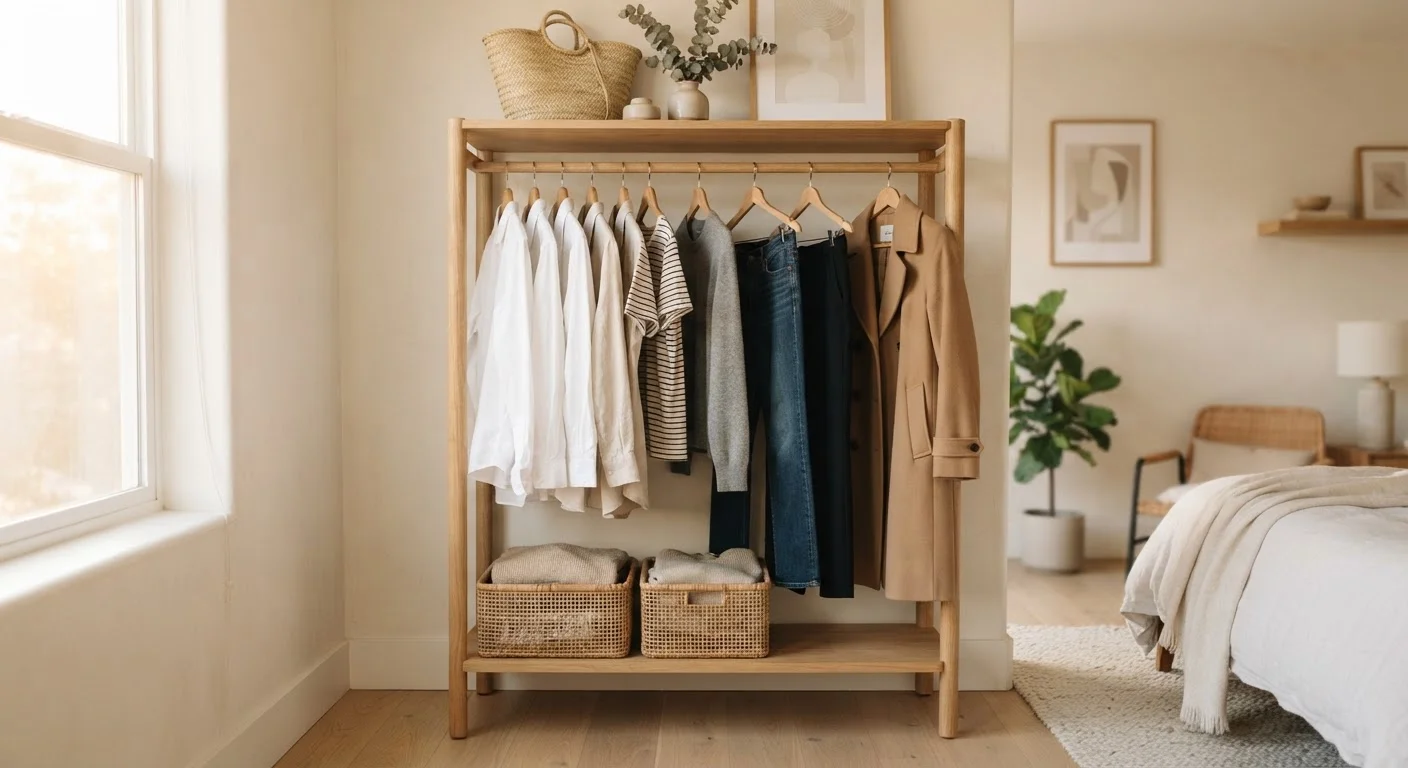
A capsule wardrobe is a small, intentional collection of clothing pieces that work well together, covering most of your everyday outfit needs. The idea is to own fewer, more versatile items rather than a large wardrobe full of clothes you rarely wear. Each piece is chosen to mix and match easily, so you can create many different outfits from a limited number of garments.
The term was coined by London boutique owner Susie Faux in the 1970s and later popularized by designer Donna Karan's "Seven Easy Pieces" collection in 1985.
Where the Concept Comes From
The capsule wardrobe concept has been around for decades, but it went mainstream in the minimalism wave of the 2010s. At its core, it's a simple idea: instead of owning more clothing than you could realistically wear, you build a tight, thoughtful collection where everything coordinates. Every item pulls its weight.
The appeal is obvious. Most Americans wear about 20% of their wardrobe 80% of the time, according to commonly cited wardrobe research. A capsule approach tries to close that gap - so the clothes hanging in your closet are actually the ones you reach for.
If you're curious how this philosophy compares to other intentional wardrobe approaches, capsule vs. curated wardrobes breaks down two distinct takes on building a more purposeful closet.
~20%
Of wardrobe items worn regularly
A widely cited wardrobe behavior pattern suggests most people regularly reach for only about 20% of the clothes they own.
33
Items in a "Project 333" capsule
The Project 333 minimalist fashion challenge - popularized by author Courtney Carver - challenges participants to dress with 33 items or fewer for three months.
What a Capsule Wardrobe Actually Looks Like
There's no official template - despite what Pinterest boards might suggest. A capsule wardrobe is personal. That said, most versions share a few characteristics:
- A limited total count - typically 25-50 pieces of clothing, not including underwear, socks, or accessories.
- High coordination - most items mix and match across multiple outfits rather than being single-use.
- Coverage across occasions - work, casual, and social situations without needing a separate wardrobe for each.
- Cohesive palette - not necessarily all neutrals, but colors and tones that genuinely work together.
What it doesn't have to look like: all grey and white minimalism, expensive designer pieces, or a specific number of items that some blogger declared definitive. Your capsule wardrobe should reflect your actual routine, not an aspirational lifestyle that doesn't fit your day-to-day reality.
Does It Actually Work?
For many people, yes - but "working" depends on what you're hoping to solve. The capsule wardrobe genuinely delivers on a few fronts:
Decision fatigue reduction: Fewer choices in the morning makes getting dressed faster and less mentally draining. Research in behavioral psychology consistently shows that too many options can lead to worse decision-making and more stress - a phenomenon sometimes called the paradox of choice.
More outfits, counterintuitively: Because every piece coordinates with others, a 30-item capsule can yield significantly more wearable outfit combinations than a 100-item wardrobe full of one-off pieces. For more on this, getting more outfits out of fewer clothes offers practical mixing strategies.
Financial clarity: When you know exactly what your wardrobe needs, you buy with purpose rather than impulse. That often means spending less over time, even if individual pieces cost more per item.
Where it falls short: if your lifestyle demands real variety - a job with a strict dress code and an active social life and outdoor hobbies - a single small capsule may feel restrictive. And for people who find genuine joy in fashion exploration, ruthless editing can feel like losing something rather than gaining it.
Start With What You Already Own
Before buying anything new, spend time with your existing wardrobe. Pull out everything, try on what you haven't worn in a while, and pay attention to what you actually feel good in. You may already have the foundation of a capsule - it's often just buried under pieces that were impulse buys or poor fits. Editing first, then shopping for gaps, is a smarter and more affordable way to begin.
How to Start - Without Starting Over
The good news: you don't need to throw everything out and start from scratch. The most sustainable entry point is a wardrobe audit - going through what you own and identifying what actually gets worn, what fits well, and what genuinely coordinates with other pieces you love.
Our wardrobe audit guide walks through exactly how to sort, evaluate, and make clear-eyed decisions about what stays. Once you know what you're working with, you can identify real gaps rather than guessing.
From there, filling those gaps intentionally - rather than impulsively - is where the capsule philosophy really pays off. And if budget is a concern, that process doesn't have to be expensive. The building a functional wardrobe on a tight budget guide covers how to do exactly that. For a deeper dive into which core pieces make a capsule function across seasons and occasions, capsule wardrobe fundamentals is a strong next read.