

Key Takeaways
Why Cross-Context Consistency Matters
Most people dress in silos. Work clothes live in one mental category, weekend clothes in another - and the two rarely overlap. The result is a wardrobe that feels like a collection of costumes rather than a reflection of one coherent person. If you've ever felt strangely out of character in your own office outfit, or overdressed-but-wrong at a casual gathering, this disconnect is likely the culprit.
Developing a style that travels well across contexts isn't about blending in everywhere - it's about feeling recognizably yourself everywhere. That's a meaningful distinction. As our personal style myths piece explores, the idea that style requires a rigid "look" is one of the most persistent misconceptions in fashion. In reality, a cohesive personal aesthetic is defined by recurring preferences - in fit, color, texture, and proportion - not by identical outfits.
For practical context on what specific settings actually require, our dress codes guide is a useful companion to the steps below.
What you will need
Building the Foundation: Tools and Mindset
Before you start making wardrobe decisions, it helps to have the right perspective and a few simple resources. You don't need a professional stylist or a complete wardrobe overhaul - what you need is a clear-eyed look at what you already own and what it says about your instincts.
Full-length mirror
Evaluates complete outfit proportions and fit across different styling combinations.
Style journal or notes app
Tracks outfit combinations, signature elements, and what works across different contexts.
Phone camera or mirror selfies
Creates a visual reference library of outfits you feel confident in.
Once you have those basics in place, the steps below walk you through the process of identifying your style signatures, building versatile pieces around them, and learning to shift between contexts without losing yourself in the process. For additional techniques on styling the same items differently, our guide on everyday styling techniques covers methods like layering and monochrome dressing that translate especially well across settings.
Style Consistency Isn't a Rigid Uniform
Keeping a consistent aesthetic doesn't mean wearing the same thing every day or refusing to adapt to context. It means your choices - across all settings - feel like they came from the same person. Flexibility and coherence can absolutely coexist.
Step-by-Step: Creating Your Cross-Context Wardrobe
Follow these steps in order - each one builds on the last. The goal isn't perfection on the first pass; it's building a practice that gets more intuitive with repetition.
Identify Your Signature Style Elements
Start by pulling out three to five pieces you reach for most often - regardless of occasion. Look for patterns: Do you gravitate toward clean lines? Earthy tones? Interesting textures? These repeating preferences are your aesthetic fingerprint. Write them down. This isn't about pinning yourself to a label like "minimalist" or "boho" - it's about recognizing the qualities that consistently make you feel like yourself.
Audit Your Wardrobe for Cross-Context Versatility
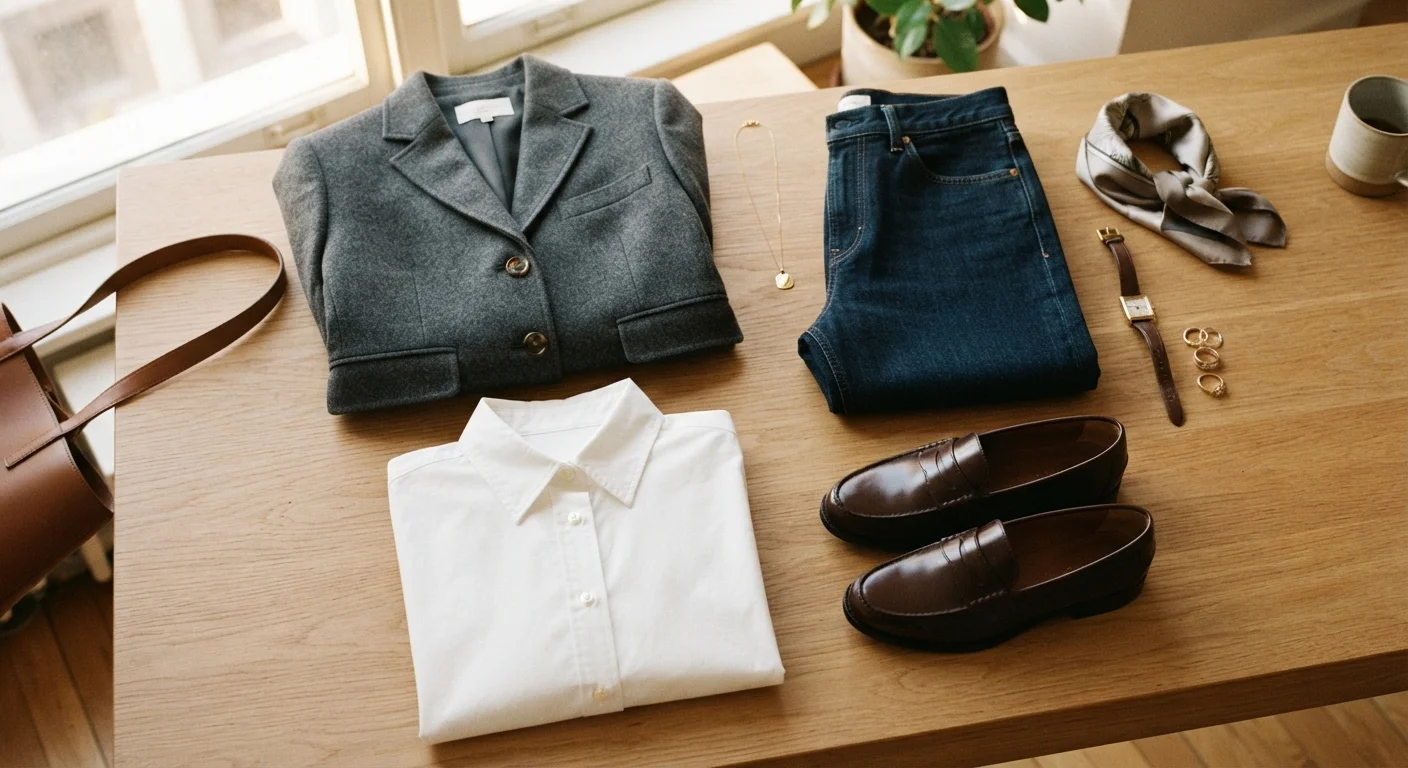
Go through your closet and flag items that can function in at least two different contexts - a well-fitted blazer that works over a dress shirt at work and over a tee on weekends, for instance. These are your bridge pieces. Aim to have at least six to eight such items. Pieces that are locked into a single setting - reserved solely for formal events or only for the gym - are useful, but they won't carry your aesthetic from one world to the next.
Establish a Core Palette That Travels Well
Choose a set of colors - neutrals as a foundation, with one or two accent tones - that you're willing to wear in both professional and casual settings. When your work clothes and your weekend clothes share a color language, you can move pieces between contexts without visual jarring. This also makes getting dressed faster and more intuitive.
Learn to Shift Formality With Single Swaps
Rather than building entirely separate outfits for work versus weekend, practice adjusting formality through single-item substitutions. Swap dress trousers for dark denim. Trade a structured heel for a leather sneaker. Replace a collared button-down with a fitted crew-neck. These micro-adjustments shift the register of an outfit without abandoning your aesthetic. The silhouette, the palette, and the fit - your style signatures - remain intact.
Test and Refine With Real Outfits
Put together three complete outfits: one for work, one for a social weekend occasion, and one for a casual errand day. Lay them out side by side (or photograph them) and evaluate whether they read as coming from the same person. If one feels like a completely different aesthetic, identify what's pulling it off course - usually it's fit, color, or a single out-of-character piece. Adjust and repeat. This practice builds the visual instinct that makes cross-context dressing feel natural over time.
Build Around a Consistent Color Palette
Choosing four to six colors that genuinely appeal to you - and building both your work and weekend wardrobes within them - is one of the most effective ways to create cross-context cohesion. When everything coordinates, mixing and matching feels effortless rather than forced.
Once you've worked through these steps, you'll likely find that getting dressed - regardless of context - becomes faster and less stressful. Your choices will feel intentional rather than reactive. For a ready-made framework to speed up the process, our outfit formulas guide offers reliable combinations you can adapt to your own palette and preferences.
Avoid Over-Adapting to Every Dress Code
Trying to fully transform your wardrobe for every context can leave you feeling like you're wearing a costume rather than your own clothes. Dress codes set a floor, not a ceiling - you have room to express yourself within them. Use the guidelines from our dress code breakdown to understand the boundaries, then personalize from there.
Maintaining Consistency as Your Life Evolves
Style consistency isn't a one-time project - it's an ongoing relationship with your own preferences. As your lifestyle, role, and taste evolve, so will the specific items you rely on. That's healthy and expected. What remains stable over time are your underlying aesthetic instincts: the colors that keep appearing in your cart, the silhouettes that consistently make you feel put-together, the textures you keep returning to.
Revisit your signature style elements seasonally. Refresh your palette if it no longer resonates. The framework you've built doesn't need to be rigid - it needs to be yours. Explore more in the Everyday Fashion hub for ongoing inspiration that keeps practical dressing at the center. And for the broader context of style as a personal practice, the Style & Beauty hub is a great place to keep exploring.