

| Warning Light Colors | Red = urgent, Amber = caution, Green/Blue = informational |
| TPMS Mandate (US) | Required on all new passenger vehicles sold in the US since 2008 (NHTSA FMVSS 138) |
| ESC Mandate (US) | Required on all new light vehicles sold in the US since model year 2012 (NHTSA FMVSS 126) |
| Check Engine Causes | Hundreds of possible OBD-II fault codes; a scan tool is needed to identify the specific trigger |
| Oil Pressure Light | Stop driving immediately - engine damage can occur within minutes if oil pressure is lost |
| Coolant Cap Warning | Never open a pressurized coolant cap on a hot engine - scalding fluid can eject suddenly |
How to Read Dashboard Warning Colors
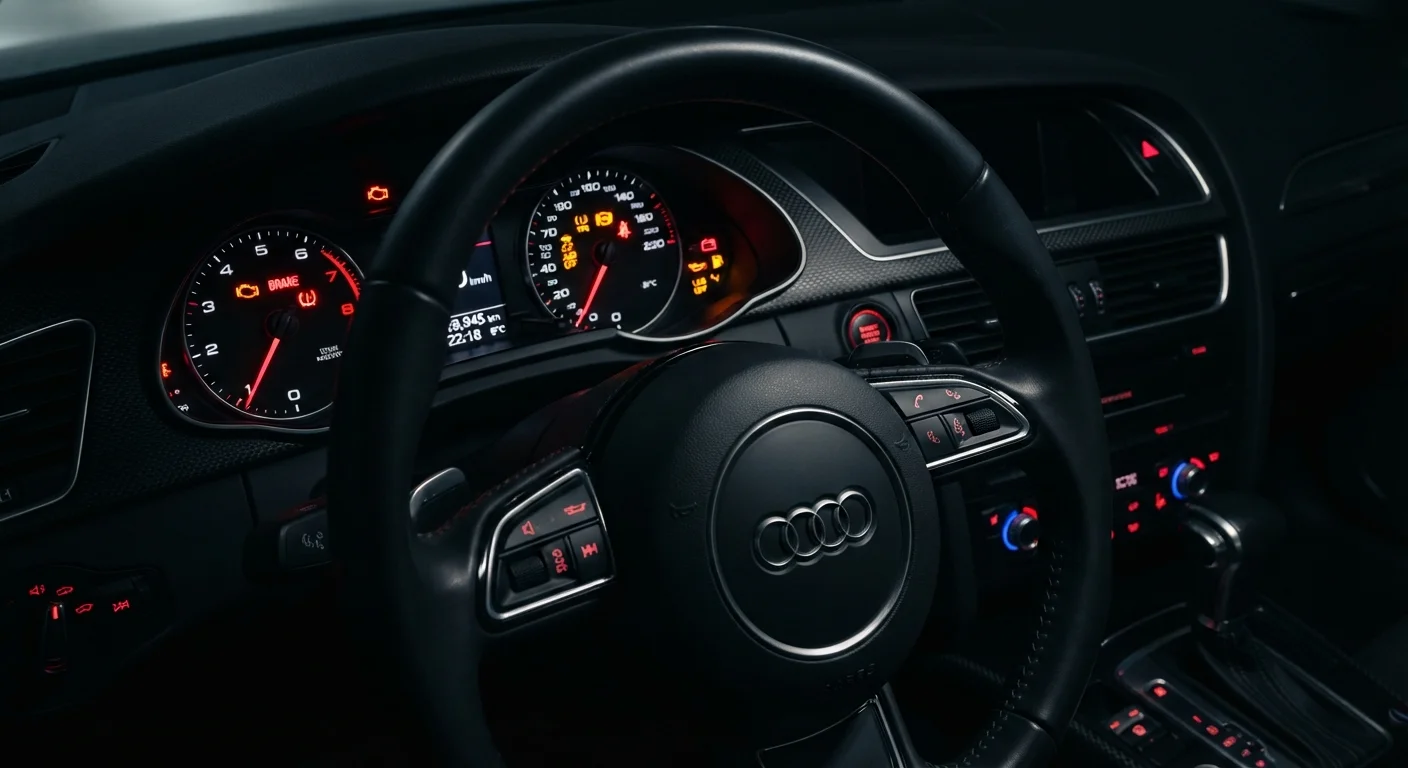
Every dashboard warning light is color-coded to signal urgency. Understanding the color system is the first step before interpreting any individual icon.
- Red: Requires immediate attention. Stop safely as soon as possible if the vehicle feels unsafe to drive.
- Amber/Yellow: A caution. Something needs attention soon - typically within a day or two - but does not demand you pull over immediately.
- Green/Blue: Informational. A system is active (e.g., high beams, turn signal). No action required.
Some vehicles also use white or cyan indicators for driver-assist features. Always consult your owner's manual for vehicle-specific meanings, as icon designs vary by manufacturer.
| Warning Light Colors | Red = urgent, Amber = caution, Green/Blue = informational |
| TPMS Mandate (US) | Required on all new passenger vehicles sold in the US since 2008 (NHTSA FMVSS 138) |
| ESC Mandate (US) | Required on all new light vehicles sold in the US since model year 2012 (NHTSA FMVSS 126) |
| Check Engine Causes | Hundreds of possible OBD-II fault codes; a scan tool is needed to identify the specific trigger |
| Oil Pressure Light | Stop driving immediately - engine damage can occur within minutes if oil pressure is lost |
| Coolant Cap Warning | Never open a pressurized coolant cap on a hot engine - scalding fluid can eject suddenly |
Common Dashboard Warning Lights Decoded
The following lights appear across most modern vehicles. Urgency levels reflect general industry guidance - your owner's manual takes precedence.
Red - Act Immediately
- Oil Pressure Warning (oil can icon)
- Low oil pressure detected. Stop driving as soon as it is safe. Continuing can cause severe engine damage within minutes.
- Engine Temperature (thermometer in waves)
- Engine is overheating. Pull over, turn off the engine, and allow it to cool before checking coolant levels. See our guide to checking under-hood fluids for safe steps.
- Battery / Charging System (battery outline icon)
- The electrical charging system is not functioning properly. The vehicle may lose power soon. Minimize electrical load and drive directly to a service location.
- Brake System (exclamation mark in circle)
- Either the parking brake is engaged or there is a fault in the brake hydraulic system. Release the parking brake first; if the light persists, have the brakes inspected immediately. For more context, see recognizing brake wear warning signs.
Amber - Address Soon
- Check Engine (engine outline)
- A fault has been detected in the engine or emissions system. A steady light usually allows continued driving short-term; a flashing light signals a more serious misfire. Learn more in our check engine light explainer.
- Tire Pressure (TPMS) (flat tire with exclamation mark)
- One or more tires are significantly under- or over-inflated. Check pressure at the next safe opportunity. Sustained driving on low tires increases blowout risk and reduces fuel efficiency.
- Traction Control / Stability Control (car with skid lines)
- System is actively correcting a slip (flashing) or has been manually disabled/has a fault (steady). A steady light on dry pavement warrants a diagnostic check.
- Transmission Temperature (gear with thermometer)
- Transmission fluid is running hot, often from towing or stop-and-go traffic. Allow the vehicle to cool; continued driving can damage transmission components.
TPMS
Tire Pressure Monitoring System. A sensor-based system that alerts the driver when one or more tires fall significantly below the recommended inflation pressure.
OBD-II Code
A standardized diagnostic trouble code generated by a vehicle's onboard computer when a sensor detects an out-of-range reading. Mechanics and some auto parts stores can read these codes with a scan tool.
Coolant (Antifreeze)
A fluid that circulates through the engine and radiator to regulate operating temperature. It prevents both freezing in cold weather and overheating in hot conditions.
Charging System
The combination of the alternator, battery, and wiring that generates and stores electrical power while the engine is running. A fault here can leave the vehicle without power.
Traction Control System (TCS)
An active safety system that reduces engine power or applies brakes to individual wheels to prevent drive-wheel slip during acceleration on low-grip surfaces.
Electronic Stability Control (ESC)
A computerized safety technology that detects and reduces loss of traction or skidding by selectively braking individual wheels. Mandatory on all US passenger vehicles sold since 2012.
Under-Hood Labels: What the Icons on Caps and Reservoirs Mean
Beyond the dashboard, automakers stamp or emboss symbols directly on fluid caps, fuse boxes, and battery terminals. Misidentifying these can lead to using the wrong fluid - a costly or even dangerous mistake.
| Label / Symbol | Location | What It Marks |
|---|---|---|
| Oil can | Engine oil cap | Engine oil fill point. Always use the viscosity grade listed on the cap or in your owner's manual. |
| Radiator / snowflake-wave | Coolant reservoir | Engine coolant (antifreeze). Never open when hot; serious burn risk. |
| Circle with dashed lines | Brake fluid reservoir | Brake fluid fill point. Mixing fluid types can compromise braking performance. |
| Windshield with spray lines | Washer fluid reservoir | Windshield washer fluid. Water alone can freeze and grow bacteria in the system. |
| + and − symbols | Battery terminals | Positive and negative battery posts. Correct polarity is critical when jump-starting. |
| Steering wheel with waves | Power steering reservoir (older vehicles) | Power steering fluid. Many newer vehicles use electric power steering with no fluid reservoir. |
Keeping fluid levels in the correct ranges is one of the most effective - and accessible - forms of preventive maintenance. For a full walkthrough, see our fluid-level checking guide.
Your Owner's Manual Is the Final Authority
Icon designs and their precise meanings vary between manufacturers and even between model years of the same vehicle. The definitions in this guide reflect broadly used conventions, but your vehicle's owner's manual will always be the definitive reference. Most manuals are also available as free PDFs on the manufacturer's website if your printed copy is missing.
When to DIY and When to Call a Mechanic
Some warning lights give you a window to act; others demand you stop immediately. As a general rule:
- Red lights + unusual sounds or smells: Pull over safely, turn off the engine, and do not continue driving. Call for roadside assistance.
- Amber lights, no performance change: Reduce non-essential trips, check your owner's manual, and schedule a professional inspection within a few days.
- Under-hood tasks you can safely do yourself: Topping off windshield washer fluid, checking oil level on a cool engine, and inspecting tire pressure are generally considered low-risk DIY tasks.
- Leave to a qualified mechanic: Brake system repairs, electrical faults, transmission work, and anything involving pressurized systems (cooling, fuel, A/C) should always be handled by a professional.
Unaddressed warning lights can escalate minor issues into major repair bills. For context on how deferred maintenance affects overall ownership costs, see our vehicle ownership costs reference guide.
This article is for general informational purposes only and does not constitute professional mechanical or safety advice. Always consult a qualified mechanic for diagnosis and repair of any vehicle system.