

| Typical pad lifespan | 25,000-70,000 miles (highly variable) (Varies by vehicle type, pad material, and driving conditions) |
| Minimum safe pad thickness | Approximately 3mm (¼ inch) (General automotive industry guideline) |
| Recommended inspection interval | Every tire rotation (every 5,000-7,500 miles) (Standard mechanic guidance) |
| Front vs. rear wear rate | Front pads wear faster in most vehicles (Due to weight transfer during braking) |
| Primary audible warning | High-pitched squeal from metal wear indicator (Built into most modern brake pads) |
The Most Common Warning Signs of Brake Pad Wear
Brake pads are designed to wear down gradually, and most vehicles build in several ways to alert you before the situation becomes dangerous. Knowing what to look and listen for lets you act early - before worn pads damage more expensive components like rotors.
| Typical pad lifespan | 25,000-70,000 miles (highly variable) (Varies by vehicle type, pad material, and driving conditions) |
| Minimum safe pad thickness | Approximately 3mm (¼ inch) (General automotive industry guideline) |
| Recommended inspection interval | Every tire rotation (every 5,000-7,500 miles) (Standard mechanic guidance) |
| Front vs. rear wear rate | Front pads wear faster in most vehicles (Due to weight transfer during braking) |
| Primary audible warning | High-pitched squeal from metal wear indicator (Built into most modern brake pads) |
Squealing or High-Pitched Squeaking
The most frequent early warning is an audible one. Most brake pads include a small metal wear indicator - a tab engineered to contact the rotor once pads reach a critically low thickness, producing a high-pitched squeal. This sound is intentional: it's your car's built-in alert. If you hear it consistently when applying the brakes, it's time to have the pads inspected.
Grinding or Metal-on-Metal Sound
A grinding noise when braking is a more serious sign. It typically means the pad material has worn completely through, and the metal backing plate is now contacting the rotor directly. This causes rotor damage and sharply reduces braking effectiveness. Do not delay having a qualified mechanic inspect the system at this stage. See what can happen when you delay this kind of maintenance for context on how small issues escalate.
Longer Stopping Distances
If your vehicle seems to take longer to stop than it used to, brake pad degradation may be a contributing factor - though road conditions and tire condition also play a role. The science behind stopping distances makes clear that braking performance is a system, not just one component.
Vibration or Pulsing Through the Pedal
A pulsing sensation in the brake pedal often signals uneven rotor wear or rotor warping, which can be a downstream consequence of running pads down too far. The rotor surface becomes uneven, causing the pads to grip inconsistently with each rotation.
Dashboard Warning Light
Many modern vehicles include a brake pad wear sensor that triggers a dashboard light when pads fall below a safe threshold. Check your owner's manual to identify this symbol - or consult our dashboard warning light quick reference for help identifying it.
Visual Inspection and When to Act
You don't always need a mechanic to get a rough sense of pad thickness. On many vehicles, you can see the brake pad through the wheel spokes without removing the wheel. Look for the pad pressed against the rotor: if the friction material appears thinner than about ¼ inch (roughly 3mm), it's time for professional evaluation.
Brake Pad
A replaceable friction component that clamps against the rotor to slow the vehicle. Pads consist of a metal backing plate bonded to a friction material layer that gradually wears with use.
Wear Indicator
A small metal tab or electronic sensor built into the brake pad that produces an audible squeal or triggers a dashboard warning light when the friction material reaches a minimum safe thickness.
Rotor (Brake Disc)
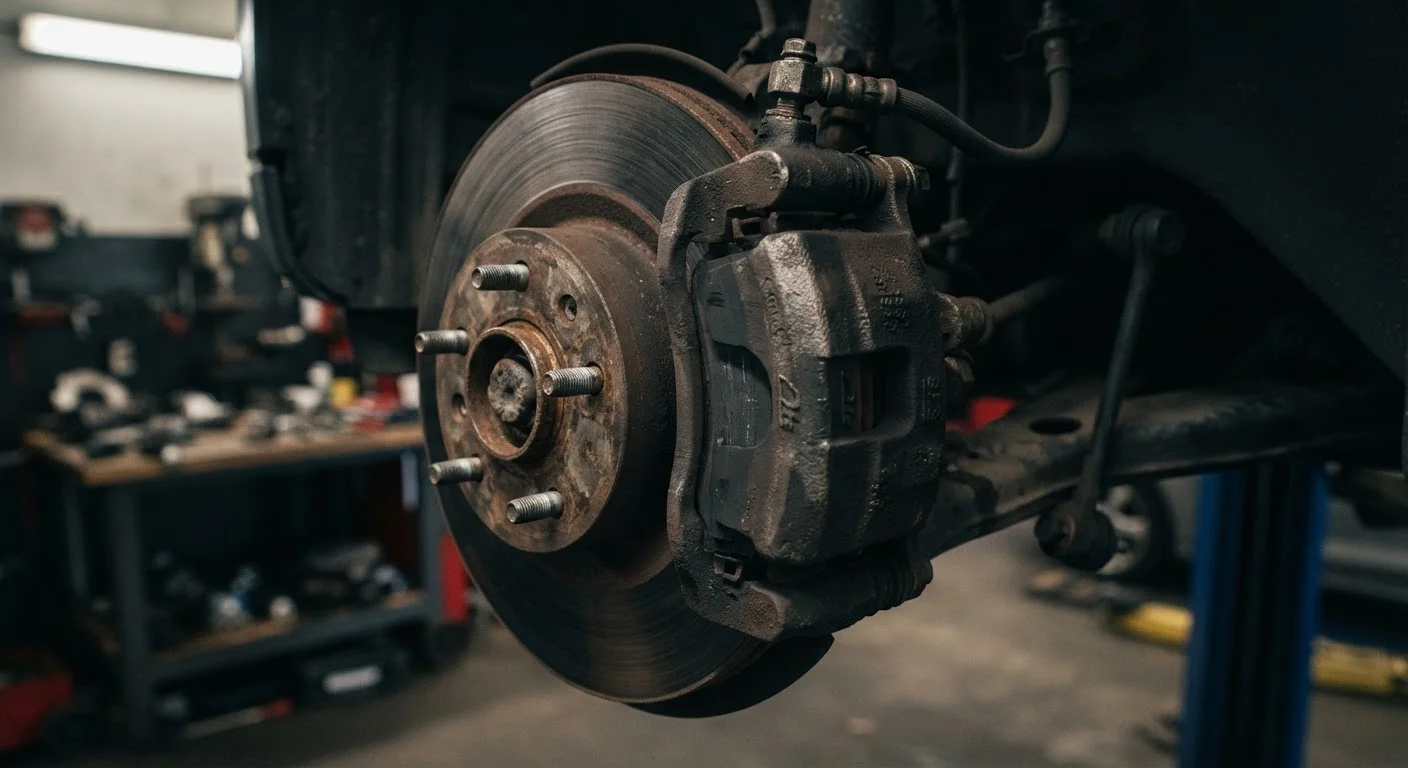
The flat metal disc that rotates with the wheel. Brake pads clamp against the rotor surface to create friction and slow the vehicle. Rotors can be scored or warped if pads wear fully through.
Caliper
The hydraulic clamp assembly that houses the brake pads and pistons. When you press the brake pedal, the caliper squeezes the pads against the rotor.
Friction Material
The compound bonded to the metal backing of a brake pad that makes direct contact with the rotor. Common types include semi-metallic, ceramic, and organic compounds, each with different wear characteristics.
Brake Fade
A temporary or permanent reduction in braking effectiveness caused by excessive heat buildup. It can result from repeated hard braking or severely worn pads that reduce heat dissipation.
How Often Should Pads Be Inspected?
As a general guideline, brake pads should be visually inspected at every tire rotation - typically every 5,000-7,500 miles. Actual pad lifespan varies significantly depending on driving style, vehicle weight, terrain, and pad material. City driving with frequent stops wears pads faster than highway commuting. While manufacturer intervals provide a baseline, your specific driving pattern matters more than mileage alone.
Front vs. Rear Pads
Front brake pads almost always wear faster than rear ones. During braking, weight transfers to the front axle, putting greater load on the front calipers. This is why front pads typically need replacement more frequently. Always inspect both axles, but expect to replace fronts first.
Don't Neglect Tires in the Equation
Brake performance doesn't exist in isolation. Worn or under-inflated tires can undermine even healthy brakes by reducing grip at the contact patch. Make sure you're keeping up with tire pressure, tread depth, and rotation as part of your overall safety routine.
This article is for general informational purposes. For any brake system concerns, have your vehicle inspected by a qualified automotive technician. Do not attempt brake system repairs without proper tools and training, as brakes are a primary safety system.