

Key Takeaways
Why Proportion Beats Precision
The nutrition conversation is often dominated by numbers - calories, macros, points, percentages. For many people, this granular tracking creates more stress than health benefit. Research consistently suggests that eating patterns matter more than individual meal calculations, and that sustainable habits tend to be simple ones.
Rather than counting every gram, a more practical approach centers on visual proportion and food variety. This is not a shortcut - it reflects how public health dietary guidelines are increasingly communicated to general audiences. The goal is a realistic framework anyone can apply at a restaurant, at home, or on a busy weeknight.
If you're curious how this compares to structured eating patterns like Mediterranean or DASH diets, see our overview of popular diet patterns - each of those frameworks also leans on food-group proportion rather than strict calorie budgets.
What you will need
How to Build a Balanced Plate
The steps below use widely recognized plate-model principles drawn from established dietary guidance. Apply them as a mental template rather than a rigid rule - real life involves imperfect meals, and that is fine.
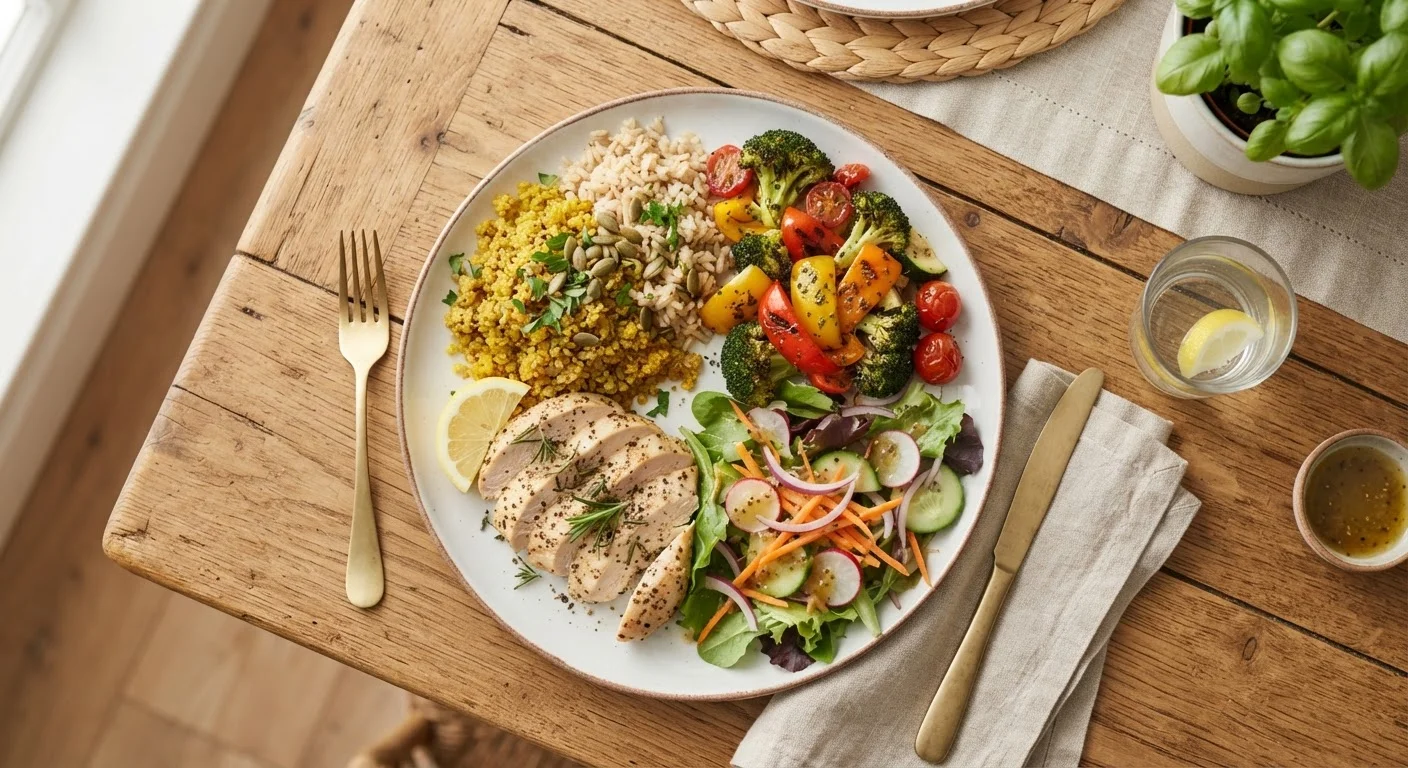
Fill half your plate with non-starchy vegetables
Aim for the largest portion of your plate to be vegetables that are not primarily starch - think leafy greens, broccoli, peppers, cucumbers, tomatoes, carrots, or cauliflower. This half provides fiber, water content, vitamins, and minerals that support overall health, and it creates volume that contributes to satiety without displacing more calorie-dense foods entirely.
Variety within this half matters. A plate with three different colors of vegetables typically delivers a broader nutrient range than a plate with one. Frozen vegetables count - they are nutritionally comparable to fresh in most cases.
Reserve one quarter of the plate for quality protein
Protein supports muscle maintenance, satiety, and a range of biological functions. A quarter of your plate - roughly the size of your palm - is a reasonable visual estimate for most adults at a main meal. Protein sources include poultry, fish, eggs, legumes (beans, lentils, chickpeas), tofu, tempeh, dairy, and lean meat.
Plant-based proteins like legumes do double duty: they provide protein and contribute fiber, which most Americans under-consume. If cooking is a barrier, see our practical guide for people who don't like cooking.
Use the remaining quarter for whole or minimally processed grains
The final quarter of the plate is suited to energy-providing carbohydrates. Whole grains - such as brown rice, quinoa, oats, whole wheat bread, farro, or barley - retain more fiber and micronutrients than their refined counterparts. This does not mean refined grains must be avoided entirely; context and overall eating patterns matter more than any single ingredient.
If your meal is already high in legumes, which provide both protein and carbohydrate, you may naturally adjust this portion smaller. The plate model is a guide, not a formula.
Add a small amount of healthy fat
Dietary fat supports nutrient absorption and satiety. Rather than a separate plate section, think of fat as a complement added during cooking or as a condiment - olive oil used for roasting vegetables, avocado sliced alongside a meal, nuts scattered over a grain bowl, or a dressing on a salad. A modest amount goes a long way.
This step is not about eliminating fat but about choosing mostly unsaturated sources, which align with longstanding dietary guidance from major public health bodies.
Choose a low-sugar or unsweetened beverage
What accompanies the plate matters. Water is the default recommendation from dietary guidelines. Unsweetened coffee, tea, and sparkling water are also generally well-regarded options. Sugar-sweetened beverages - sodas, sweetened juices, flavored drinks - add calories without meaningful nutritional contribution and are consistently flagged in public health nutrition research as an area worth reducing.
This step is often overlooked in plate-building conversations but has a practical impact on the overall nutritional quality of a meal.
Consistency Over Perfection
No single meal defines your overall nutritional health. If a meal doesn't match the plate model - a social dinner, a travel day, a busy evening - that is entirely normal. What matters is the pattern across many meals over time. Aim for balance most of the time, and extend yourself reasonable flexibility.
Making It Work Beyond the Plate
A single meal framework is a starting point, not the whole picture. A few broader habits reinforce what you build at the plate level:
- Vary your proteins across the week - rotating between legumes, fish, poultry, eggs, and other sources broadens your nutrient intake naturally.
- Read ingredient labels with intention - packaged foods can fit a balanced diet, but understanding what's in them helps. Our guide on reading an ingredient list explains what to actually look for.
- Plan ahead when possible - even a loose weekly plan reduces last-minute choices that tend to skew toward less nutritious options. The weekly meal planning checklist offers a structured starting point.
- Keep budget in mind - balanced eating does not require expensive specialty foods. Strategies for eating well on a tight budget can make this more accessible.
Plate Models Are Not One-Size-Fits-All
General plate frameworks are designed for healthy adults without specific medical conditions. People managing diabetes, kidney disease, eating disorders, pregnancy, or other health concerns have nutritional needs that differ meaningfully from general guidance. If you have a diagnosed condition or are unsure whether this approach suits your situation, consult a registered dietitian or your healthcare provider before making changes to your diet.
This article is for general informational and educational purposes only and does not constitute medical or dietary advice. Individual nutritional needs vary. Please consult a registered dietitian or qualified healthcare provider for guidance specific to your health situation.