

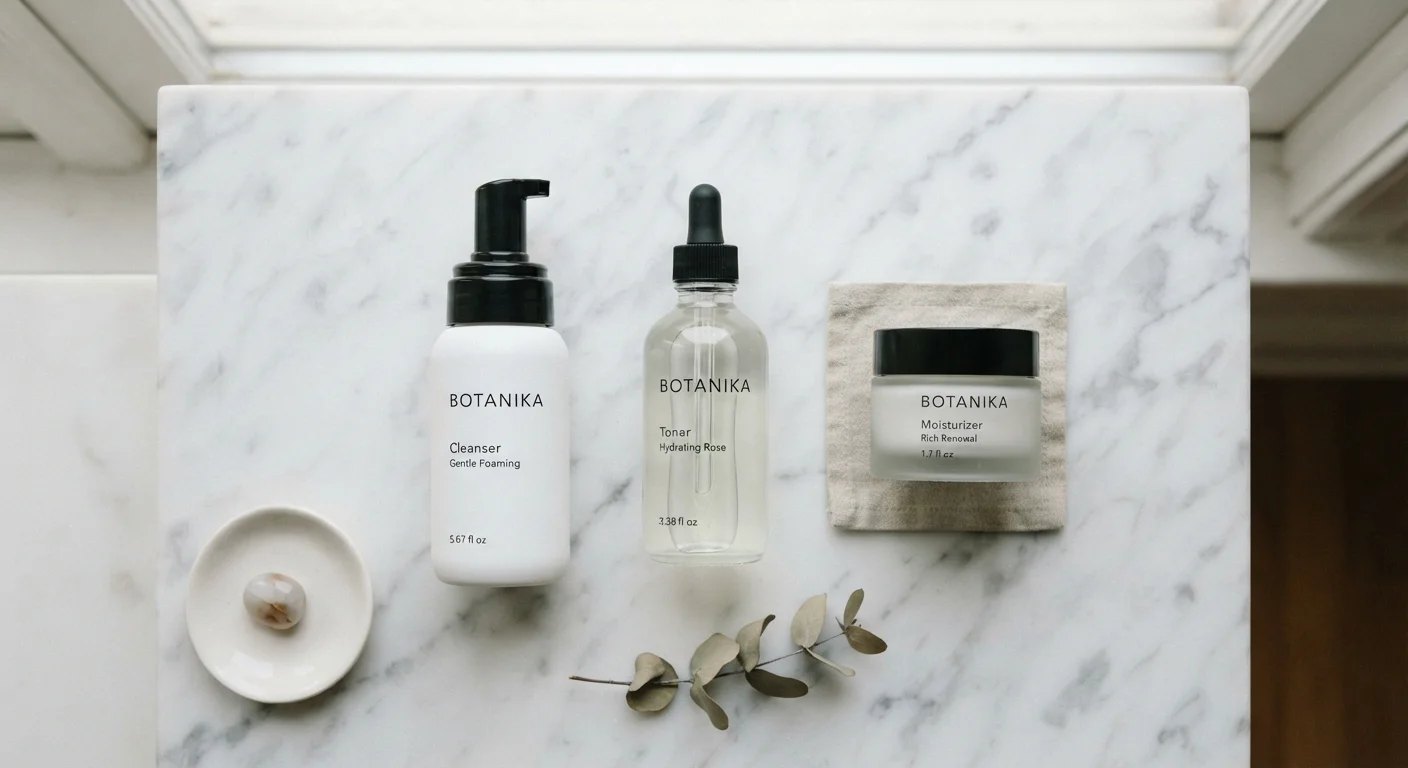
| Order of application | Cleanser → Toner → Moisturizer |
| Cleanser's primary role | Remove debris without stripping the skin barrier |
| Toner's primary role | Balance pH, hydrate, or deliver targeted actives |
| Moisturizer's primary role | Deliver hydration and slow transepidermal water loss |
| Minimum effective routine | Cleanser + Moisturizer (toner is optional for many skin types) |
| Common mistake | Skipping moisturizer on oily skin, which can increase oil production |
The Core Three: What They're Each Doing
Walk into any beauty aisle and you'll see shelves of products making big promises. But underneath all the buzzwords, most effective skincare routines are built on just three steps: cleansing, toning, and moisturizing. Before you can decide what's right for your skin, it helps to understand what each step is actually accomplishing - and why the order matters.
| Order of application | Cleanser → Toner → Moisturizer |
| Cleanser's primary role | Remove debris without stripping the skin barrier |
| Toner's primary role | Balance pH, hydrate, or deliver targeted actives |
| Moisturizer's primary role | Deliver hydration and slow transepidermal water loss |
| Minimum effective routine | Cleanser + Moisturizer (toner is optional for many skin types) |
| Common mistake | Skipping moisturizer on oily skin, which can increase oil production |
Cleanser: The Foundation of Everything
A cleanser's job is straightforward: remove dirt, oil, sunscreen, and makeup that accumulate on your skin throughout the day. Without this step, everything you apply afterward sits on top of that debris rather than absorbing into your skin.
Cleansers come in several forms - gels, foams, creams, micellar waters, and balms - and the right formula depends on your skin type. Gel and foam cleansers typically work well for oilier skin, while cream and balm formulas tend to be more comfortable for dry or sensitive types. The key is that a good cleanser removes impurities without stripping your skin's natural moisture barrier, which is why that tight, squeaky-clean feeling after washing can actually be a red flag rather than a sign of success.
Toner: The Misunderstood Middle Step
Toners have a complicated reputation, partly because older formulas were alcohol-heavy and genuinely harsh. Modern toners are a different story. Today's versions are designed to do one or more of the following: restore the skin's natural pH after cleansing, add a layer of hydration, deliver targeted actives like niacinamide or gentle exfoliating acids, or prep skin to absorb the next product more effectively.
Is toner strictly necessary? Not always. If your cleanser is gentle and pH-balanced, your skin may not need pH correction. But a hydrating toner can be a genuinely useful addition for dry or dehydrated skin - and if yours contains active ingredients, it's doing real work. Think of toner as the step most worth personalizing to your specific skin concerns.
Moisturizer: Sealing In What Matters
Moisturizers serve two primary functions: they deliver water and humectants to the skin, and they form a barrier that slows moisture loss throughout the day. Even people with oily skin generally benefit from a moisturizer - skipping it can actually prompt skin to produce more oil to compensate for dryness.
Moisturizers range from lightweight gels and fluid lotions to thicker creams and rich balms. The right weight depends on your skin type and climate. Most contain a combination of humectants (like hyaluronic acid, which draws moisture in), emollients (which soften and smooth), and occlusives (which seal the surface). Understanding that combination can help you make sense of ingredient labels - for more on that, see how to read a skincare ingredient label.
Do You Actually Need All Three Steps?
The honest answer is: it depends. The cleanser-toner-moisturizer sequence became the standard because it covers three distinct skin needs - cleansing, balancing, and hydrating - in a logical order. But not every skin type needs every step in the same way.
Some people do well with just a gentle cleanser and a moisturizer, skipping toner entirely. Others find a toner essential for managing texture or hydration. If you're figuring out where to start, building a skincare routine from scratch walks through a sensible framework for beginners.
If you're drawn to a more streamlined approach, it's worth reading about the real trade-offs of a minimal skincare routine - because paring back has genuine advantages, but also some real limits depending on your skin concerns.
Humectant
An ingredient that attracts water molecules and draws them into the skin. Common examples include hyaluronic acid and glycerin, both widely used in toners and moisturizers.
Emollient
An ingredient that fills gaps between skin cells to soften and smooth skin texture. Emollients are a key component of most moisturizers.
Occlusive
An ingredient that forms a physical barrier on the skin's surface to reduce moisture loss. Examples include petrolatum and certain plant-based waxes and oils.
Skin barrier
The outermost layer of skin (stratum corneum) that protects against environmental damage and prevents water from evaporating. A compromised barrier can lead to dryness, sensitivity, and irritation.
Transepidermal water loss (TEWL)
The process by which water passively evaporates through the skin's surface. Moisturizers, especially those containing occlusives, help reduce TEWL.
pH balance
Healthy skin sits at a slightly acidic pH, generally between 4.5 and 5.5. Cleansers that are too alkaline can disrupt this balance; toners are sometimes used to restore it.
Beyond these three core steps, additional products like serums, exfoliants, and SPF layer on top for targeted results. Exfoliation explained is a useful next read once your core routine feels dialed in. The goal isn't the longest possible routine - it's understanding what each product does so you can build something consistent and sustainable for your actual life.