

Key Takeaways
Lower risk of irritation and product conflicts
Each additional product introduces new ingredients that can interact, sensitize, or simply overwhelm skin. Fewer products mean fewer potential triggers, which is especially valuable for reactive or sensitive skin types.
Easier to identify what's working
When something changes in your skin - for better or worse - a minimal routine makes it far easier to trace the cause. With ten products, isolating the culprit is a genuine challenge.
More affordable and less time-consuming
Three products cost significantly less than ten, and the daily routine takes minutes rather than a committed block of time. Both factors improve the odds that you'll actually stick with it.
Suitable as a strong foundation for any skin type
Cleansing, moisturizing, and sun protection address the fundamentals of skin health regardless of skin type - oily, dry, combination, or sensitive.
Reduces decision fatigue
A shorter shelf means fewer choices to make each morning, which lowers the mental barrier to following through consistently.
Limited ability to address specific skin concerns
Targeted issues like post-inflammatory hyperpigmentation, active acne, or fine lines generally require dedicated actives - ingredients that don't fit comfortably into a two-to-three-step routine without displacing a core step.
May not deliver visible anti-aging benefits
Retinoids and peptides have meaningful research behind them for supporting skin structure over time, but incorporating them meaningfully moves a routine beyond 'minimal' territory.
SPF compliance becomes critical and non-negotiable
A minimal routine relies heavily on daily sunscreen use for long-term skin protection. Skipping SPF in a stripped-back routine removes the most evidence-supported step available.
Not ideal for every life stage or skin shift
Hormonal changes, seasonal shifts, and aging can all demand more from a skincare routine. A rigid minimal approach may need revisiting as skin needs evolve.
Our Verdict
A minimal skincare routine is a genuinely strong choice for maintaining baseline skin health, reducing irritation risk, and building a consistent daily habit. It works beautifully for those whose primary goals are cleanliness, hydration, and sun protection. However, if you have specific concerns - active acne, uneven tone, or visible signs of aging - a two-step routine alone is unlikely to be enough, and targeted ingredients will eventually earn their shelf space.
Best for skincare beginners, those with sensitive or reactive skin, and anyone who struggles to maintain more complex routines consistently.
What 'Minimal' Actually Means in Skincare
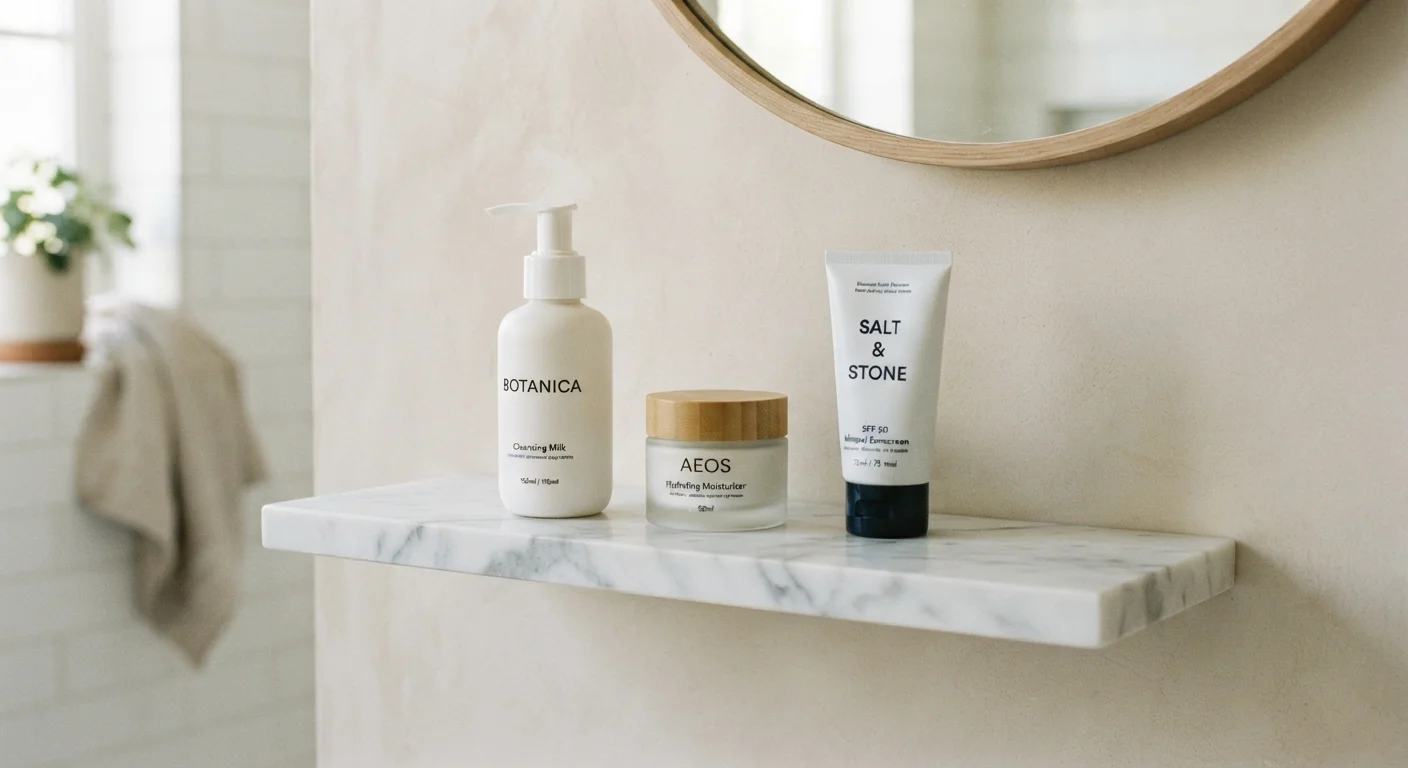
A minimal skincare routine generally means three core steps: a gentle cleanser, a moisturizer, and a broad-spectrum SPF applied in the morning. Some practitioners pare it down further to just cleanser and SPF. What's left off the shelf is just as important as what stays - serums, toners, exfoliants, eye creams, and treatment actives are all optional, not required.
This approach has gained genuine momentum as dermatologists and estheticians push back against the idea that more products equal better skin. The case for simplicity is compelling - but it's not the whole picture. For a plain-language look at what each classic skincare step actually contributes, see what each step actually does.
Lower risk of irritation and product conflicts
Each additional product introduces new ingredients that can interact, sensitize, or simply overwhelm skin. Fewer products mean fewer potential triggers, which is especially valuable for reactive or sensitive skin types.
Easier to identify what's working
When something changes in your skin - for better or worse - a minimal routine makes it far easier to trace the cause. With ten products, isolating the culprit is a genuine challenge.
More affordable and less time-consuming
Three products cost significantly less than ten, and the daily routine takes minutes rather than a committed block of time. Both factors improve the odds that you'll actually stick with it.
Suitable as a strong foundation for any skin type
Cleansing, moisturizing, and sun protection address the fundamentals of skin health regardless of skin type - oily, dry, combination, or sensitive.
Reduces decision fatigue
A shorter shelf means fewer choices to make each morning, which lowers the mental barrier to following through consistently.
Where a Minimal Routine Falls Short
The honest limitations of going minimal matter just as much as the benefits. If your skin goals extend beyond basic maintenance - managing persistent breakouts, addressing hyperpigmentation, or supporting skin through hormonal changes - two or three products rarely carry enough targeted actives to make a meaningful difference.
Retinoids, niacinamide, vitamin C, AHAs, and BHAs all have strong research backing for specific concerns, but none of them belong in a truly minimal routine unless they replace a step rather than add one. Choosing to go minimal isn't a free pass from those conversations - it's a decision to prioritize consistency and simplicity over targeted treatment.
Limited ability to address specific skin concerns
Targeted issues like post-inflammatory hyperpigmentation, active acne, or fine lines generally require dedicated actives - ingredients that don't fit comfortably into a two-to-three-step routine without displacing a core step.
May not deliver visible anti-aging benefits
Retinoids and peptides have meaningful research behind them for supporting skin structure over time, but incorporating them meaningfully moves a routine beyond 'minimal' territory.
SPF compliance becomes critical and non-negotiable
A minimal routine relies heavily on daily sunscreen use for long-term skin protection. Skipping SPF in a stripped-back routine removes the most evidence-supported step available.
Not ideal for every life stage or skin shift
Hormonal changes, seasonal shifts, and aging can all demand more from a skincare routine. A rigid minimal approach may need revisiting as skin needs evolve.
If you're wondering whether your current routine has gaps or redundancies worth examining before going minimal, a routine audit checklist is a useful starting point.
The Consistency Factor: Why Simpler Often Wins
One of the most underrated advantages of a minimal routine is adherence. Dermatology consistently emphasizes that a routine you actually follow every day outperforms a sophisticated one applied irregularly. A ten-step regimen abandoned by Wednesday delivers far less than three products used faithfully morning and night.
3 steps
Core steps dermatologists most commonly recommend
Cleanser, moisturizer, and SPF are consistently cited by board-certified dermatologists as the non-negotiable baseline for daily skin care.
~70%
Of skincare users report routine abandonment
Consumer research consistently finds that complexity is a leading reason people drop skincare routines altogether, underscoring the practical value of simplicity.
This is especially relevant for anyone new to skincare or returning after a gap. Routines that hold up over time are built on repeatable habits, not product count. If you're starting from zero, building a personal grooming routine from scratch walks through how to establish those habits without overwhelm.
It's also worth noting that what happens off the bathroom shelf matters significantly. Sleep quality, hydration, stress levels, and diet all visibly influence how skin looks and behaves - sometimes more than the products themselves. Personal care habits that support skin health covers these lifestyle factors in depth.
Minimal Doesn't Mean One-Size-Fits-All
A minimal routine still needs to be matched to your skin type. A foaming cleanser that works well for oily skin can strip dry skin significantly. The principle is fewer products - not identical products for everyone. If you're unsure where to begin, building a skincare routine from scratch offers a personalized starting framework.