

Key Takeaways
Start here
What Does 'Aesthetic' Actually Mean?
Next
Start With What You Already Feel
Then
Building Your Visual Reference Library
Getting deeper
Identifying Patterns and Themes
Apply it
Translating Inspiration Into Everyday Choices
What Does 'Aesthetic' Actually Mean?
In the context of personal style, an aesthetic is the visual sensibility that runs through the way you dress, present yourself, and choose the things around you. It's not a rigid uniform or a label to fit into - it's closer to a consistent visual language that communicates something genuine about who you are.
You don't need a Pinterest-ready label like "cottagecore" or "dark academia" to have a coherent aesthetic. What matters is identifying what you're instinctively drawn to and understanding why. That understanding is the foundation everything else builds on.
Aesthetic
A consistent visual sensibility that shapes how you put together outfits and what you're drawn to. It reflects personal taste rather than trend-following.
Mood board
A collection of images, colors, textures, and references gathered in one place to help identify and visualize a personal style direction.
Style archetype
A recognized category of personal style - such as minimalist, romantic, or classic - used as a reference point for describing visual identity.
Style anchor
A consistent element - a silhouette, color palette, or fabric - that appears repeatedly in your wardrobe and acts as a reliable foundation for your look.
Visual reference library
A personal collection of images from any source that genuinely excites you, used to identify patterns and articulate aesthetic preferences.
For a broader look at every dimension of style development, the complete personal style framework is a great companion reference as you work through this process.
Start With What You Already Feel
Before opening any app or magazine, pay attention to your existing reactions. Which outfits - on yourself or others - make you stop and look twice? Which textures feel satisfying to wear? When you pull something from your closet without thinking, what does it look like?
These micro-preferences are already data. The clothes you reach for on low-effort days, the colors you keep buying without planning to, the silhouettes that make you feel most like yourself - all of it counts. You're not starting from zero; you're starting from a place that's already yours.
Use Your Closet as a Starting Survey
Flip every hanger the same direction in your closet. Over the next few weeks, reverse the hanger each time you wear an item. What's still untouched after a month tells you as much as what you reach for constantly. This low-effort exercise reveals your real preferences without requiring you to make any decisions upfront.
Once you've done some honest self-observation, a wardrobe audit is a natural next step to see what patterns your existing closet reveals.
Building Your Visual Reference Library
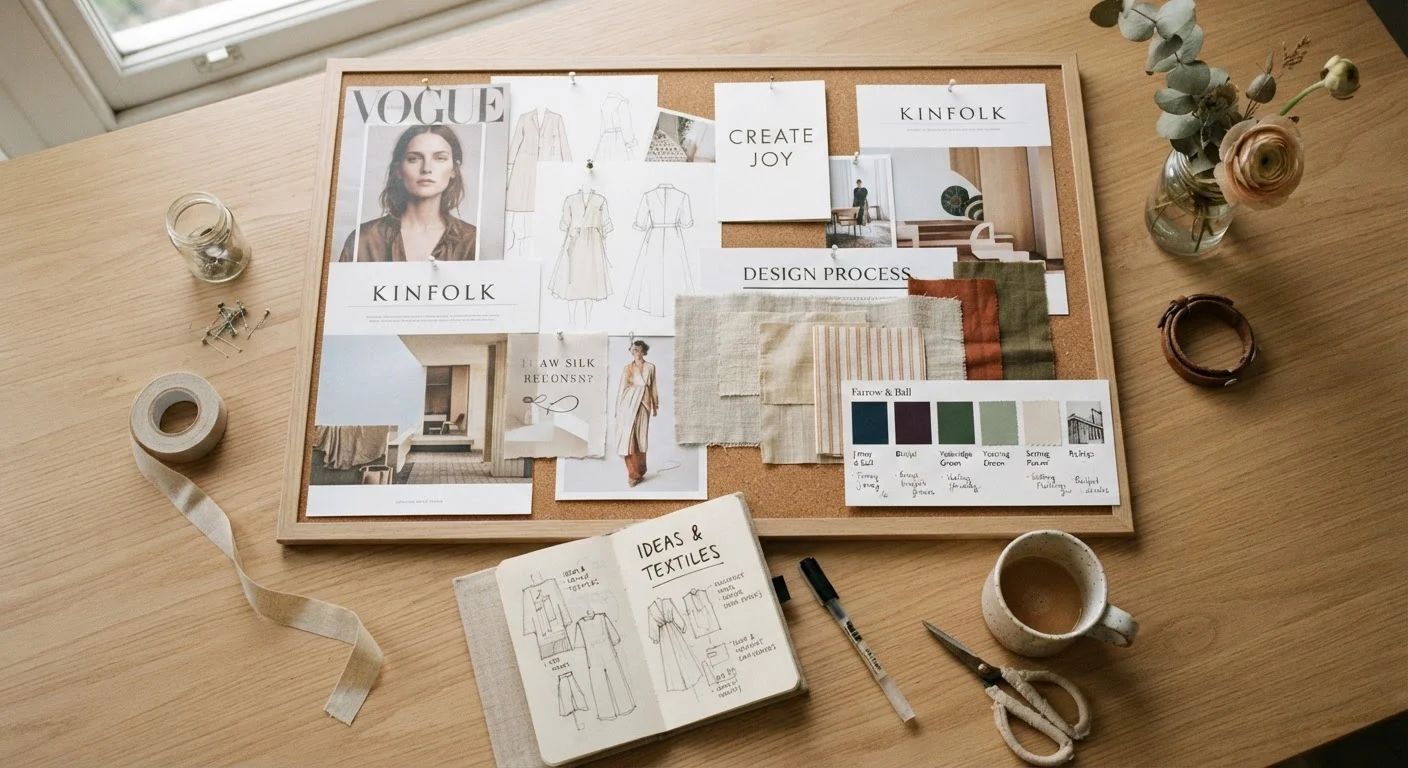
A mood board - digital or physical - is one of the most practical tools a style beginner can use. Save images that excite you without overthinking whether they're "realistic" or cohesive. The goal at this stage is volume and honesty, not curation.
Pull from a wide range of sources: editorial photography, street style, films, art, interiors, nature. If you find yourself defaulting only to algorithmically served content, it's worth exploring non-social-media inspiration sources - they often surface more unexpected and personal reference points.
Don't limit yourself to images of clothing. The mood, light, and atmosphere of a photo can tell you just as much about your aesthetic as the specific garments in it.
Identifying Patterns and Themes
Once you have a collection of saved images, step back and look at the whole rather than the parts. What colors repeat? Are the silhouettes consistently structured or relaxed? Is there a recurring texture - linen, leather, knit? Do the images feel romantic, minimal, graphic, layered?
These patterns are your aesthetic in rough form. You don't need to name it yet - just notice what's consistent. If you want vocabulary to help articulate what you're seeing, style archetypes explained provides a clear reference guide to the most recognized visual identities.
Absent Choices Are Information Too
When reviewing your visual reference library, pay attention to what never appears - not just what does. If bold patterns are consistently missing, that's a meaningful signal about your preferences. An aesthetic is defined as much by what you consistently exclude as what you're instinctively drawn toward.
It's also genuinely useful to note what's absent from your collection. If bold prints never appear, that's information. If everything feels soft and muted, that's information too. Aesthetic is as much about consistent exclusions as it is about inclusions.
Translating Inspiration Into Everyday Choices
The distance between an aspirational mood board and your actual morning routine can feel vast. The bridge is identifying the underlying qualities you're drawn to rather than replicating specific looks. If you're drawn to images with a relaxed, layered quality, experiment with adding an open overshirt to outfits you already own. If clean lines keep appearing in your saves, try editing accessories rather than overhauling everything.
Small, deliberate experiments are more sustainable than complete wardrobe overhauls. Once you've clarified your aesthetic instincts, building a signature look without starting over walks you through working with what you have to develop something cohesive.
Style is an ongoing conversation with yourself - not a destination you reach and then stop. Give yourself permission to experiment, change your mind, and refine as you go. That flexibility is exactly what makes personal style genuinely personal.
Style Archetypes Reference Guide
A structured overview of the most recognized personal style archetypes - from classic to avant-garde - to help you find vocabulary for what you're already drawn to.
Non-Social-Media Inspiration Sources
Films, art, subcultures, and more - a curated look at places people draw genuine style inspiration from outside the algorithm.
Digital Mood Board Tools
Free browser-based tools for collecting and organizing visual references in one place, making it easier to spot consistent aesthetic patterns across your saves.