

Key Takeaways
Why Go Beyond the Algorithm?
Social media platforms are extraordinarily good at one thing: showing you more of what you already engage with. That efficiency is also their limitation. When your style inspiration lives primarily inside an app, it tends to orbit the same handful of aesthetics, the same color stories, the same silhouettes - because the algorithm rewards content that already performs well with audiences like yours. The result is a wardrobe that feels borrowed rather than built.
The good news is that style inspiration is genuinely everywhere, and the sources that tend to produce the most original personal aesthetics are the ones that exist entirely outside that loop. Whether you're just beginning to develop your look or trying to push an existing one further, the list below gives you concrete, actionable places to start. For a broader framework on how all of this fits together, our complete personal style guide walks through every stage of the process.
Cinema and Film History
Costume design is one of the most underappreciated sources of wearable inspiration available. Films use clothing to communicate character, era, and emotion with precision - which means every frame is a study in intentional dressing. Classic Hollywood, Italian neorealism, New Wave French cinema, and contemporary independent films each carry distinct visual vocabularies worth exploring.
Watch with the sound off occasionally and notice how clothing alone tells you something about a character's inner world. Sketch or screenshot shapes, proportions, and color combinations that resonate with you, then ask what specific element is doing the work: the collar, the fabric weight, the layering ratio.
Costume designers solve the same problem you do: telling a story through what someone wears.
Art History and Museum Collections
Paintings, sculpture, and decorative arts are loaded with color relationships, textile references, and compositional ideas that translate directly into fashion thinking. The earth tones of Flemish still-life paintings, the graphic boldness of Bauhaus design, the layered textile richness of Japanese woodblock prints - all of these carry palette and texture information you can bring into your wardrobe.
Many major museum collections are accessible online with high-resolution images. Browse by era or movement rather than artist, and save examples that stop you - even if you can't immediately articulate why. Over time, patterns in what catches your attention become surprisingly revealing. This exercise connects directly to the three visual levers - color, pattern, and silhouette - that shape how any look communicates.
Art movements carry color and texture intelligence that fashion has borrowed from for centuries.
Subcultures Past and Present
Subcultures develop aesthetics in response to identity, community, and values rather than commercial trend cycles - which gives their visual languages unusual depth and consistency. Mod, punk, goth, skate, workwear, preppy, Afrofuturism, and dozens of regional scenes each developed coherent codes that designers have drawn from repeatedly. Understanding the logic behind a subculture's aesthetic - why a specific silhouette or material made sense for those people in that moment - helps you borrow meaningfully rather than superficially.
Reading about the social context of a movement alongside looking at its imagery produces a richer understanding than visuals alone. Exploring recognized style archetypes is a useful complement here, since many archetypes are rooted in subcultural origins.
Subcultural aesthetics are built around identity and values - not trend cycles - which makes them enduringly coherent.
Travel and Regional Dress
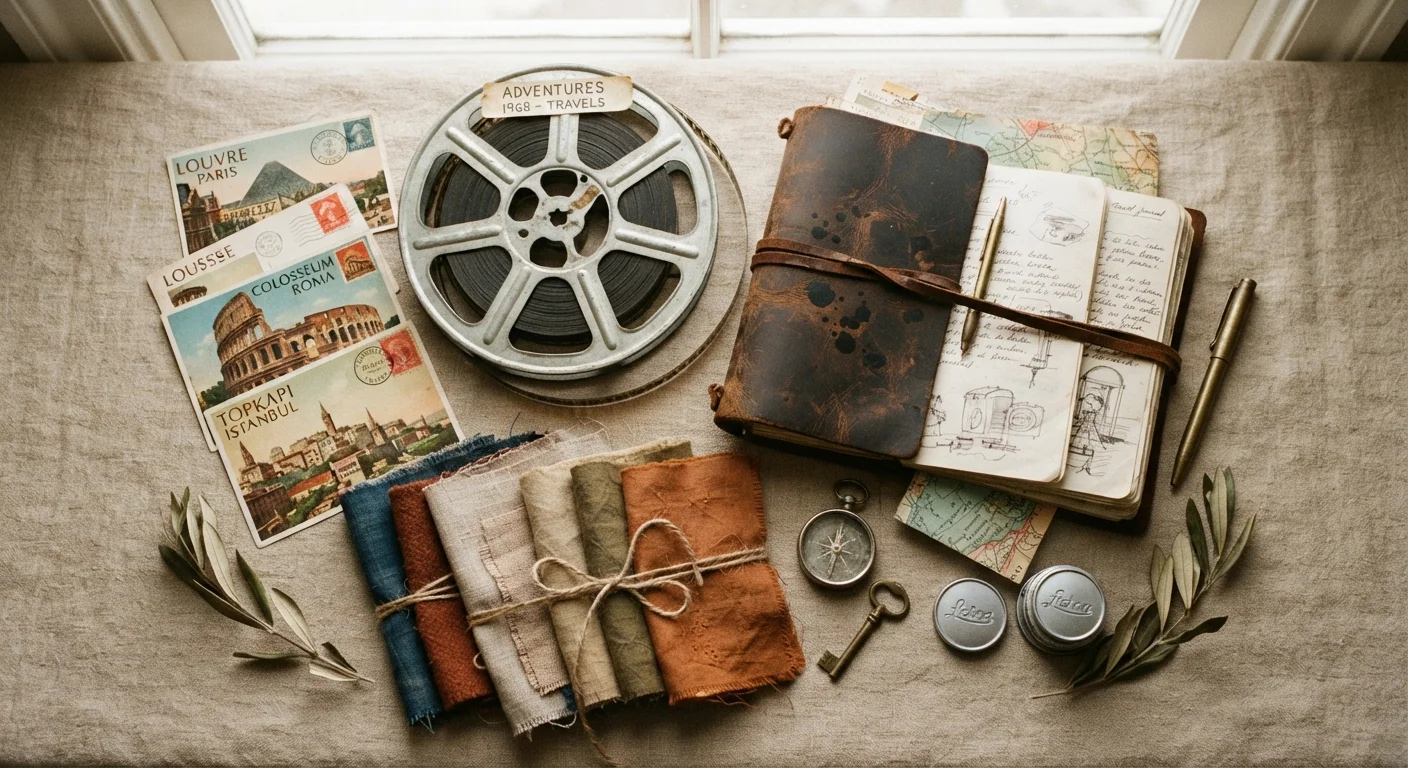
Regional dress traditions - both historical and contemporary - reflect climate, craft heritage, local materials, and social norms. Even brief exposure to how people dress in a different city or country can reset your sense of what's normal, possible, or appealing. A color combination that reads as unusual at home might be completely standard somewhere else, and encountering it in context makes it feel wearable in a new way.
Travel doesn't have to mean international trips. Visiting a different neighborhood, a local ethnic market, or a regional museum with a strong textile collection can deliver the same perceptual shift on a smaller scale. The point is removing yourself from your usual visual environment long enough to see clothing choices you wouldn't otherwise encounter.
Regional dress traditions reset your sense of what's normal - the most useful thing travel can do for personal style.
Literature and Character Description
Novelists frequently describe clothing in ways that reveal character psychology - and that connection between inner life and outward appearance is exactly what strong personal style is trying to achieve. Reading closely for how authors dress their characters, and why those details matter to the story, is a surprisingly effective way to clarify your own relationship between self-expression and clothing choices.
This source works especially well when you notice a described outfit or detail that makes you feel something specific - aspiration, recognition, comfort, excitement. Those reactions are data about your own aesthetic preferences, and they're worth capturing in a style journal or notes app alongside your visual references.
When a fictional character's wardrobe stops you mid-page, that reaction is telling you something real about your own taste.
Architecture and Interior Design
The principles that make a building or room visually compelling - proportion, material contrast, the interplay of structure and detail - are the same principles at work in a well-constructed outfit. Architects and interior designers think rigorously about how elements relate to each other, which is a useful framework to borrow when you're trying to understand why some combinations feel balanced and others don't.
Midcentury modern spaces, maximalist Victorian interiors, minimalist Scandinavian design, and ornate Art Deco buildings all carry distinct aesthetic sensibilities. Noticing which environments feel instinctively right to you, and which elements within them you're drawn to, provides clues about your broader visual preferences that extend naturally into how you dress.
The proportion and material logic that makes a room feel right applies directly to how an outfit is constructed.
Putting It All Together
The goal of drawing from these sources isn't to recreate a film costume or replicate a painting palette - it's to train your eye to notice what consistently excites you across entirely different contexts. That pattern of excitement is your aesthetic signature. Once you can identify it, you can apply it deliberately to everything from a capsule wardrobe to a single outfit decision.
Keep a Running Inspiration Log
Rather than saving references to a platform-based mood board, try a physical notebook, a camera roll folder, or a simple notes document organized by source type. Reviewing it every few weeks reveals which themes recur - and recurring themes are the clearest signal of your genuine aesthetic preferences. The medium matters less than the habit of capturing and revisiting.
If you're ready to go deeper on how to apply what you discover, understanding color, pattern, and silhouette is the natural next step - three concrete levers you can use to translate any inspiration source into real outfits. And if you're still finding your footing, this starting-point guide for style beginners covers the foundational groundwork at a comfortable pace.