

Style & Beauty

The Style Audit: Evaluating What Your Wardrobe Is Actually Telling You

Share
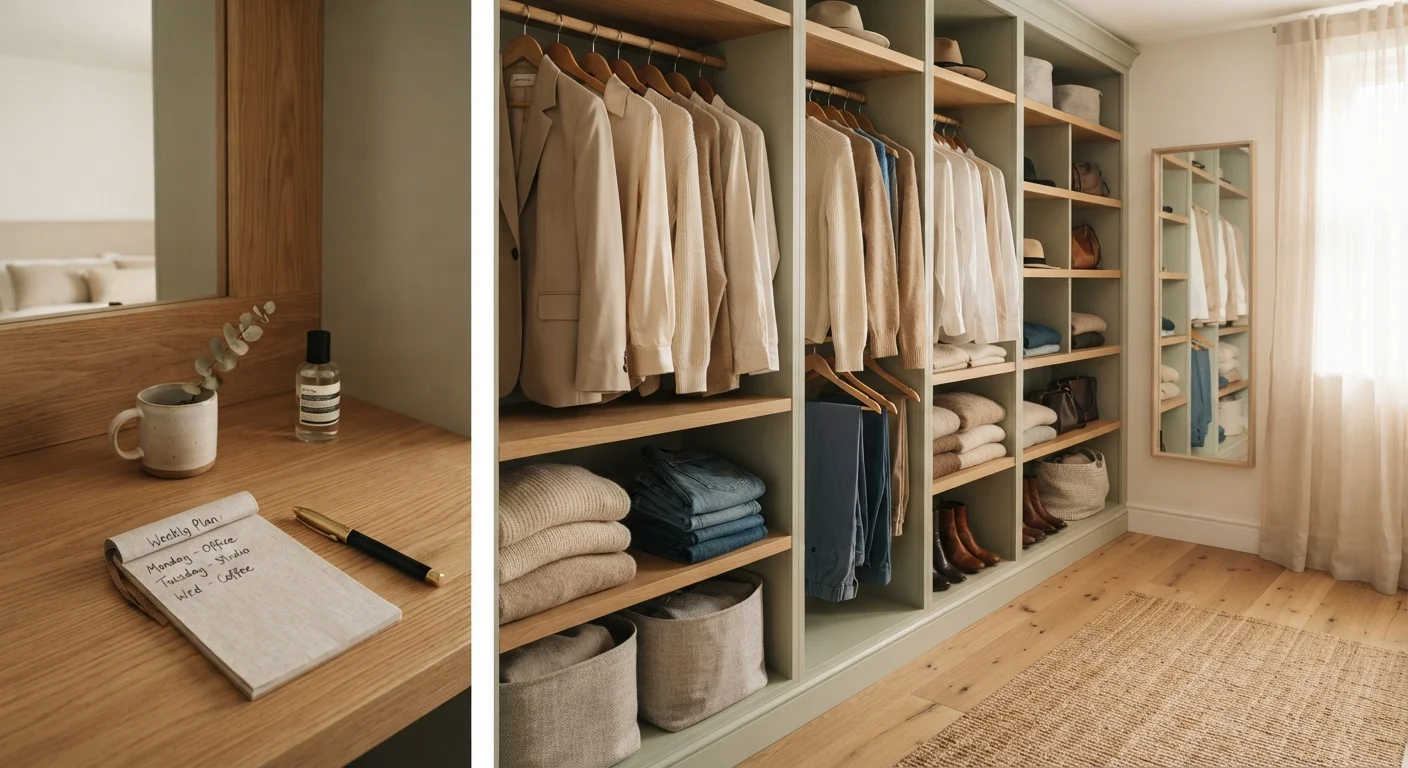
Organized closet with color-coordinated clothing and a notepad on a wooden surface nearby

Key Takeaways

A style audit reveals patterns in what you actually wear versus what you only think you wear.
Identifying your real aesthetic requires honest reflection, not aspirational shopping lists.
Wardrobe gaps are easier to fill once you understand what your existing pieces communicate.
Alignment between your clothes and your lifestyle is the core goal of any effective audit.
You don't need to purge everything — you need to understand what you already own.
45–90 min

Summary

18 items · 45–90 minutes

Why a Style Audit Is Different From a Closet Cleanout

Most people approach their wardrobe with one goal: get rid of stuff. But a style audit is a different exercise entirely. While a cleanout focuses on subtraction, a style audit is about reading what your wardrobe is already saying — and deciding whether you agree with the message.

Your closet is a record of every purchase decision you've made, every phase you've passed through, and every version of yourself you've tried on. When you look at it with fresh eyes, patterns emerge: colors you keep gravitating toward, silhouettes you avoid without realizing it, and categories that are wildly over- or under-represented relative to your actual life.

This checklist is designed to help you surface those patterns, name them, and use them to make smarter, more intentional choices going forward. If you're newer to the concept of personal style, the starting point for style beginners is a great companion read before you dive in.

Inventory & First Impressions

Pull everything out of your closet and lay it flat or hang it in full view so nothing is hidden. Must
Note your immediate emotional reaction to the whole collection — excited, overwhelmed, indifferent — before analyzing individual pieces. Should
Separate items you've worn in the past three months from those you haven't touched. Must
Group clothing by category (tops, bottoms, outerwear, occasion wear) to get a clear picture of volume and balance. Must

Pattern Recognition

Identify the three to five colors that appear most frequently — these are the backbone of your real palette. Must
Note recurring silhouettes: are you consistently drawn to fitted, relaxed, structured, or draped cuts? Must
Look for fabric patterns or textures that keep showing up (stripes, florals, denim, knits) to understand your material preferences. Should
Compare your most-worn items to your least-worn and write down what they have in common within each group. Must

Lifestyle Alignment Check

Map your wardrobe categories against how you actually spend your time each week — work, casual, social, active. Must
Identify any category that's significantly over-represented for your lifestyle (e.g., formal wear for a casual work environment). Should
Flag pieces you own for an aspirational version of your life rather than your current reality — and decide honestly whether they serve you now. Should
Check that you have enough versatile everyday pieces to cover your most frequent weekly scenarios without stress. Must

Gap & Duplication Analysis

List categories where you own five or more near-identical pieces and ask whether the volume is justified by frequency of wear. Should
Identify specific types of items you find yourself repeatedly wishing you had when getting dressed. Must
Check for missing "bridge" pieces — transitional items like a lightweight layer or a neutral shoe — that would make existing outfits more functional. Should

Aesthetic Clarity & Next Steps

Write a two-to-three sentence description of the aesthetic your wardrobe currently projects, as if describing it to someone else. Must
Write a second description of the aesthetic you actually want to project — compare the two for alignment or divergence. Must
Create a short list of no more than five intentional additions that would meaningfully close the gap between where you are and where you want to be. Should
Schedule a follow-up audit in three to six months to track whether your purchases and choices are moving in the direction you identified today. Nice to have

What to Do With What You Find

After completing this audit, you'll likely land in one of three places: clarity, confusion, or a mixture of both. All three are useful starting points.

If your wardrobe reflects a clear aesthetic you feel good about, your next step is identifying gaps — the specific types of pieces that would make your existing items more functional and wearable. You can think about building a functional wardrobe on a tight budget as a next step if spending is a concern.

If your wardrobe feels scattered or contradictory, that's actually valuable data. It means you're in a style evolution — which is normal. Exploring style archetypes from classic to avant-garde can help you find language for what you're reaching toward. And for a more structural take on the entire personal style journey, the complete framework for defining and evolving your look offers a thorough roadmap.

Avoid Auditing When You're Fatigued or Stressed

Decision fatigue is real, and auditing your wardrobe when you're tired or emotionally depleted can lead to hasty choices you'll regret. Set aside a window when you feel clear-headed and unhurried. If you find yourself making rapid-fire judgments without reflection, take a break before continuing.

One thing this audit should not do is make you feel like your taste is wrong. Style is personal by definition. The goal here is alignment — making sure what you own actually serves the life you're living and the person you're becoming.

If you're planning a full seasonal reset alongside this process, the seasonal wardrobe transition guide covers how to rotate and reassess without the chaos.

Required

Full-length mirror

Allows you to assess how pieces actually look when worn, not just how they appear on a hanger.

Required

Notepad or notes app

Essential for recording patterns, gaps, and aesthetic observations as you work through the audit.

Optional

Camera or phone

Photograph your laid-out wardrobe to review it with fresh eyes after a short break.

Optional

Clothing rack or open floor space

Gives you room to sort and view everything at once rather than digging through a stuffed closet.

Style & Beauty Editorial Team is the collective byline for our editorial team and contributor network. Articles published under this byline or an editorial pen name are researched, written, and reviewed according to our editorial standards for clarity, consistency, and independence before publication.

View all articles by Style & Beauty Editorial Team →
Disclaimer: The content on this site is for informational purposes only and is not a substitute for professional advice. Always consult a qualified professional for guidance specific to your situation.