

| Number of core archetypes | 6 primary, with many hybrid expressions |
| Most common real-world pattern | Blend of 2-3 archetypes with one dominant |
| Primary defining elements | Silhouette, color palette, texture, and proportion |
| Archetype spectrum range | Classic (restrained) → Avant-Garde (experimental) |
| Best identification method | Audit repeat-wear items in your existing wardrobe |
What Is a Style Archetype?
A style archetype is a recognized pattern of aesthetic choices - silhouettes, colors, textures, and proportions - that together create a coherent visual identity. Think of archetypes less as rigid boxes and more as reference points on a spectrum. Most people naturally blend two or three, with one tending to dominate.
Understanding where your instincts land on that spectrum is genuinely useful. It makes getting dressed faster, helps you shop with more intention, and gives you a shared vocabulary to describe your taste to anyone - a stylist, a tailor, or a friend rifling through a thrift rack on your behalf. If you're still working out the foundational steps of discovering what you like, our guide for style beginners is a solid place to start.
| Number of core archetypes | 6 primary, with many hybrid expressions |
| Most common real-world pattern | Blend of 2-3 archetypes with one dominant |
| Primary defining elements | Silhouette, color palette, texture, and proportion |
| Archetype spectrum range | Classic (restrained) → Avant-Garde (experimental) |
| Best identification method | Audit repeat-wear items in your existing wardrobe |
The Core Archetypes, Defined
These six archetypes cover the broadest range of aesthetic territory. They're descriptive, not prescriptive - use them as mirrors, not rules.
Classic
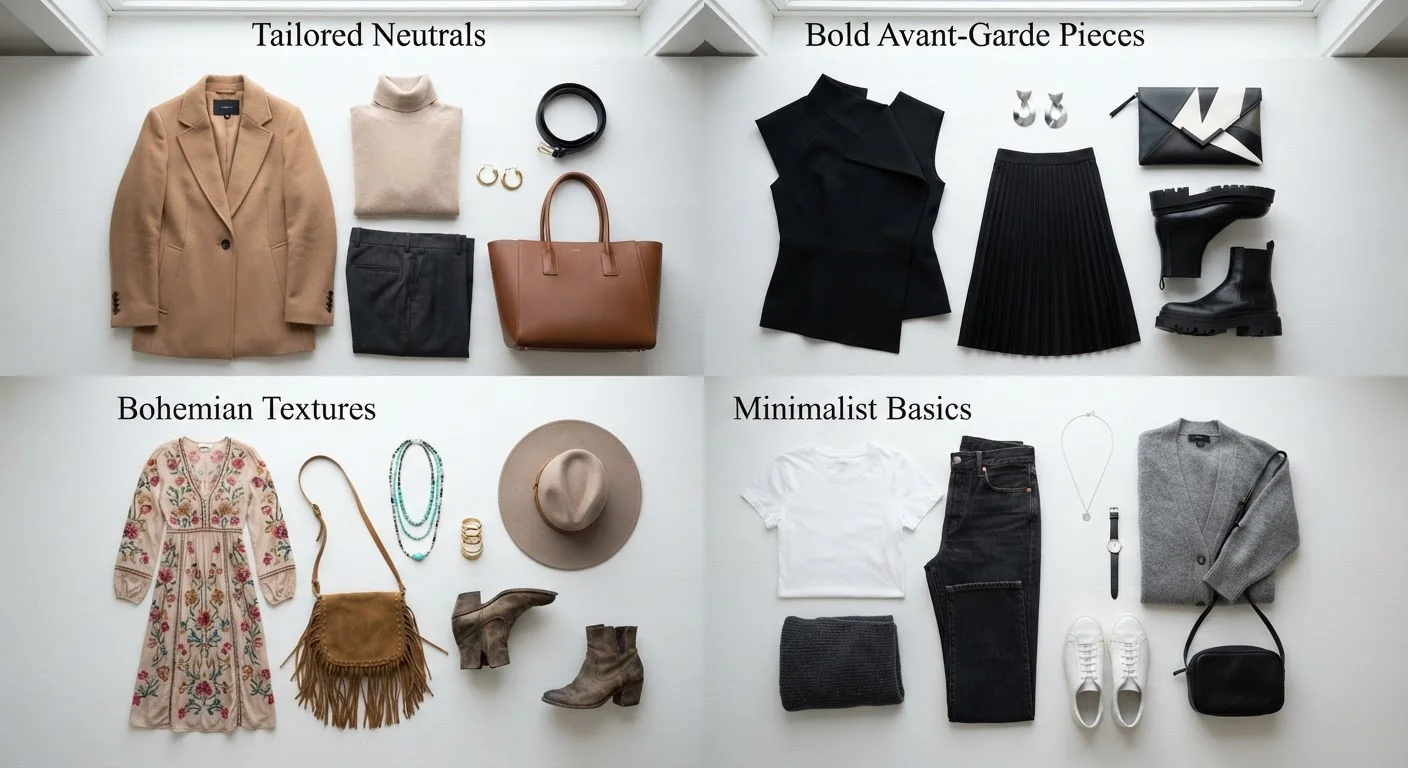
Defined by timeless tailoring, restrained color palettes (navy, camel, ivory, black), and quality over novelty. Classic dressers prioritize longevity and polish. Think structured blazers, well-fitted trousers, and leather accessories with clean lines. The goal is to look put-together without ever looking trend-chasing.
Minimalist
Overlaps with Classic but leans further into reduction. Fewer pieces, tighter edits, a near-total absence of embellishment. Minimalist style is often monochromatic or limited to two neutrals. Fit and fabric quality carry the entire weight of an outfit because there's nothing else to distract the eye.
Romantic
Soft silhouettes, feminine details, and a palette that favors blush, dusty rose, cream, and florals. Romantic dressing isn't exclusively about gender expression - it's about mood. Ruffles, lace, wrap shapes, and flowy fabrics are hallmarks. This archetype tends to feel personal and emotionally expressive.
Bohemian
Draws from folk traditions, global textiles, and a relaxed, layered sensibility. Earthy tones, fringe, embroidery, mixed prints, and natural materials define the look. Bohemian style values individuality and often incorporates vintage or handcrafted pieces. It reads as effortless rather than composed.
Edgy / Street
Rooted in subculture - punk, skate, hip-hop, workwear - this archetype uses clothing as a form of identity signaling. Dark palettes, utilitarian details, statement footwear, and graphic elements are common. It's confident, sometimes confrontational, and intentionally anti-establishment in its references.
Avant-Garde
The most conceptual end of the spectrum. Avant-garde dressing treats the body as a canvas for artistic expression. Unexpected proportions, deconstructed construction, and experimental materials are central. This archetype borrows from fine art and performance, and is less concerned with wearability than with making a statement. Non-algorithmic inspiration sources - art, film, architecture - tend to fuel this style more than social feeds do.
Style archetype
A recurring pattern of aesthetic choices - silhouette, palette, texture - that together form a recognizable visual identity. Archetypes serve as reference categories, not rigid rules.
Silhouette
The overall shape or outline created by a garment or outfit. Silhouette is one of the most powerful signals of which archetype a look falls into.
Avant-garde
A style approach that prioritizes artistic experimentation and conceptual expression over convention or commercial wearability. Avant-garde dressing often references fine art, architecture, or performance.
Minimalism (style)
An approach to dressing that reduces clothing choices to a tight, intentional edit - typically neutral colors, clean lines, and no embellishment. Fabric quality and fit carry the visual weight.
Hybrid archetype
A personal aesthetic that draws meaningfully from two or more recognized archetypes at once. Most real-world style identities are hybrids rather than pure expressions of a single archetype.
Finding and Refining Your Archetype
The most reliable way to identify your archetype is to audit what you actually reach for - not what you aspire to own, but what earns repeat wear. Patterns in your closet reveal your real aesthetic preferences far more honestly than a mood board does. Our wardrobe audit guide walks through exactly that process.
Once you have a working sense of your dominant archetype, the next layer is understanding how the three visual levers - color, pattern, and silhouette - reinforce or soften it. A Romantic palette in a Minimalist silhouette, for example, creates something quieter and more contemporary than either archetype alone. Exploring those three levers deliberately is how most people move from "I know my general vibe" to "I know exactly what I'm doing and why."
Style evolves. Your archetype at 22 may shift meaningfully by 35, and that's not inconsistency - it's growth. Think of archetypes as working hypotheses you revise as you live, not permanent classifications. For a full framework that covers discovery through evolution, the complete personal style guide is worth bookmarking as a long-term reference.
Archetypes Are Starting Points, Not Labels
No archetype is inherently more sophisticated, credible, or desirable than another - they simply describe different aesthetic priorities. Avoid using archetype language to judge your own style or anyone else's. The goal is clarity and self-expression, not hierarchy. If a given archetype doesn't resonate with you at all, that's useful information too.